Breakthrough for Future-Proof Cement Production
The technology is designed to capture up to 90 per cent of CO₂ emissions from exhaust gases
Advertisement


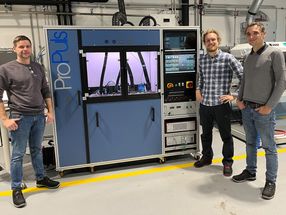
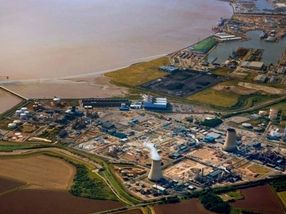
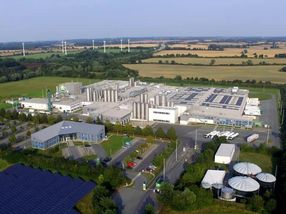
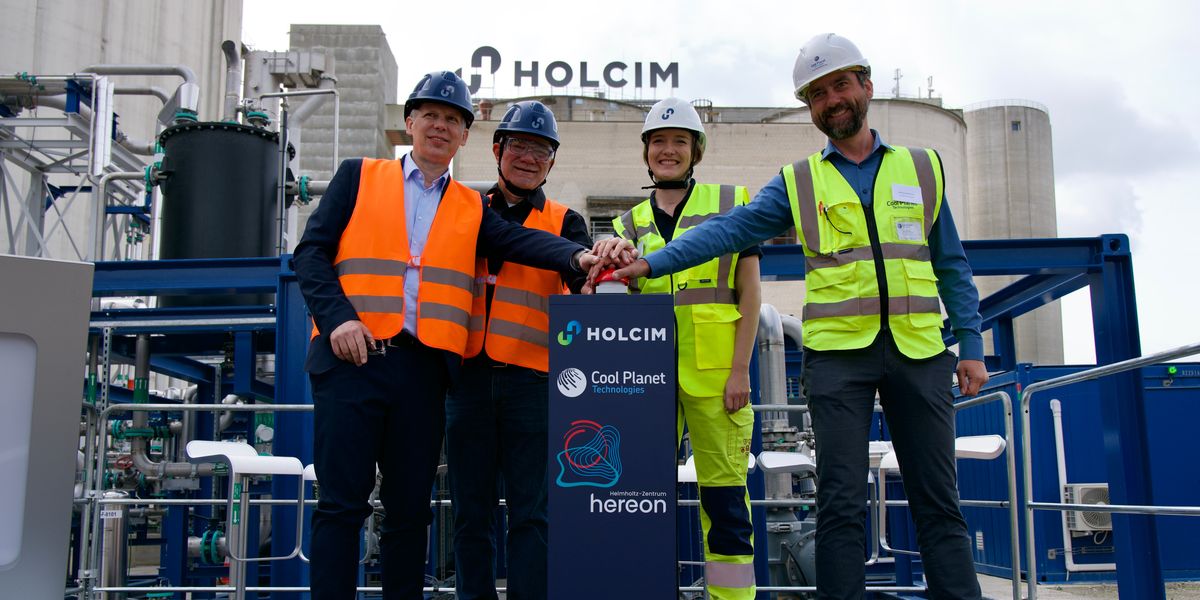
Cement production is responsible for around eight percent of global CO₂ emissions. The Holcim Deutschland GmbH aims to drive the decarbonization of the industrial sector and has installed a membrane-based pilot plant at its cement works in Höver. The innovative technology was developed at the Helmholtz-Zentrum Hereon and brought to market by Cool Planet Technologies Limited (CPT). It is designed to capture up to 90 percent of the CO₂ emissions from the plant’s exhaust gas. The project represents a major step toward a future-proof industrial sector in Germany.
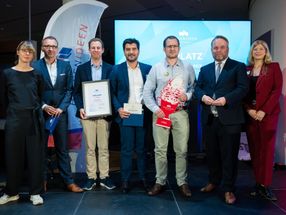
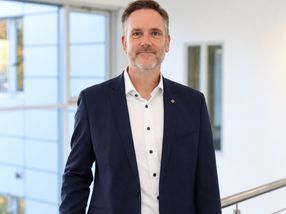
On 21 August, the new membrane pilot plant at the Höver cement works was officially commissioned by Lower Saxony’s Minister-President Olaf Lies, Johannes Steiniger, Parliamentary State Secretary at the Federal Ministry for Economic Affairs and Energy, and Stephan Hinrichs, CEO of Holcim Germany. “The cement industry faces particular challenges in decarbonization. Here in Höver, we are now demonstrating how the transformation of the cement sector can succeed,” said Olaf Lies, emphasizing the national significance of the project. “With this new facility, Holcim is making a clear commitment to Germany as an industrial location and an important contribution to the goal of a climate-neutral Lower Saxony.”
The project receives funding from the “Federal Funding Program for Industry and Climate Protection,” through which the Federal Ministry for Economic Affairs supports the decarbonization of industry, including the development and application of CCU/S (Carbon Capture, Utilization, and Storage) technologies for the capture, storage, and utilization of CO₂. “The government is providing targeted funding for innovative climate protection technologies. The companies and scientists in our country have many good ideas that they are successfully developing and implementing, as is the case here at the cement plant in Höver. We are proud of that. The federal government wants to do its part to establish CCU/S as a climate protection technology for sectors with emissions that are difficult to avoid, such as the cement industry,” says Johannes Steiniger.
“Höver will be one of the first industrial sites in Germany where CO₂ will be captured in practice and on a larger scale,” said Holcim CEO Stephan Hinrichs. “In doing so, we are relying on leading European technology and the engineering expertise of our technology partners. Together, here in Lower Saxony, we are proving that climate protection and industrial competitiveness go hand in hand.”
Prof Oliver Zielinski, Scientific Managing Director of Hereon, praised the valuable collaboration: “In Höver, scientific research is being transformed into a future-proof solution for industrial practice. The major challenges of decarbonization can only be solved through close cooperation between science and industry.”
A Globally Leading Approach to CO₂ Separation
Cement is the binding agent used in concrete and is therefore one of the most important raw materials in the construction industry. In Germany alone, around 30 million tonnes of cement are consumed each year. During production, limestone, clay, sand, and iron ore are fired at 1,450 degrees Celsius. This process generates up to one tonne of CO₂ per tonne of cement produced. To enable net-zero-emission production, the CO₂ must be removed from the kiln exhaust gases. This is where Hereon’s research comes in.
“Our membrane technology is among the world’s leading approaches to CO₂ separation. It is the result of many years of consistent and interdisciplinary research and development,” said Dr. Torsten Brinkmann, scientist at the Hereon Institute of Membrane Research and scientific lead of the Holcim project. “The technology can be used not only in cement plants, but also in other sectors such as the steel industry and renewable energy generation.”
Filtering Tens of Thousands of Tonnes of CO₂
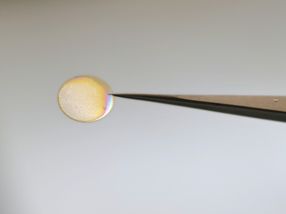
The Hereon membranes consist of multiple polymer layers and allow CO₂ to pass through more quickly than other flue gas components such as nitrogen and oxygen. In Höver, the exhaust gas stream from the cement plant is routed through the pilot facility and across the membranes. The CO₂ is separated and discharged, while the remaining low-emission gas stream is returned to the cement plant. At this stage of expansion, up to ten thousand tonnes of greenhouse gases are expected to be captured annually in Höver. The CO₂ is processed and can then be used as a feedstock, for example in the beverage industry or for the production of chemicals and biofuels.
The membrane process is chemical-free and can be operated entirely using renewable electricity. As such, it is one of the most efficient methods of capturing CO₂. The system is installed downstream of the actual production process, making it possible to retrofit existing plants without extensive modifications. In Höver, the technology is being tested in a cement plant on this scale for the first time. Through the decarbonization of the facility, Holcim aims to secure cement production at this site for decades to come.


Other news from the department science