A new route to safe and sustainable synthetic chemistry
CO₂ as a source of oxygen: University of Bayreuth revolutionises oxidation chemistry
Advertisement


Oxidation reactions are indispensable to the chemical industry, but from a process safety perspective they are among the most challenging transformations. A research team at the University of Bayreuth, working in collaboration with international partners, has now introduced a fundamentally new approach to oxidation reactions in which carbon dioxide is used as the oxygen source for chemical synthesis. This makes the reaction both safer and more sustainable. The researchers report on this new approach in Science.
Oxidation processes can be observed not only in everyday life—for example when iron rusts or fuels burn—but are also indispensable in industry: the transformation of molecules through oxidation produces active pharmaceutical ingredients and precursors for plastics. Some everyday materials, such as paints and coatings, harden only through oxidation. On an industrial scale, however, where safety and controllability are of central importance, oxidation reactions are avoided wherever possible because they pose safety risks. Many oxidations generate heat, which can lead to so-called thermal runaway, in which the reaction accelerates uncontrollably and may result in fires or explosions. In particular, the use of oxygen as an oxidising agent presents an explosion hazard. Other oxidising agents are also difficult to control due to their chemically aggressive properties.
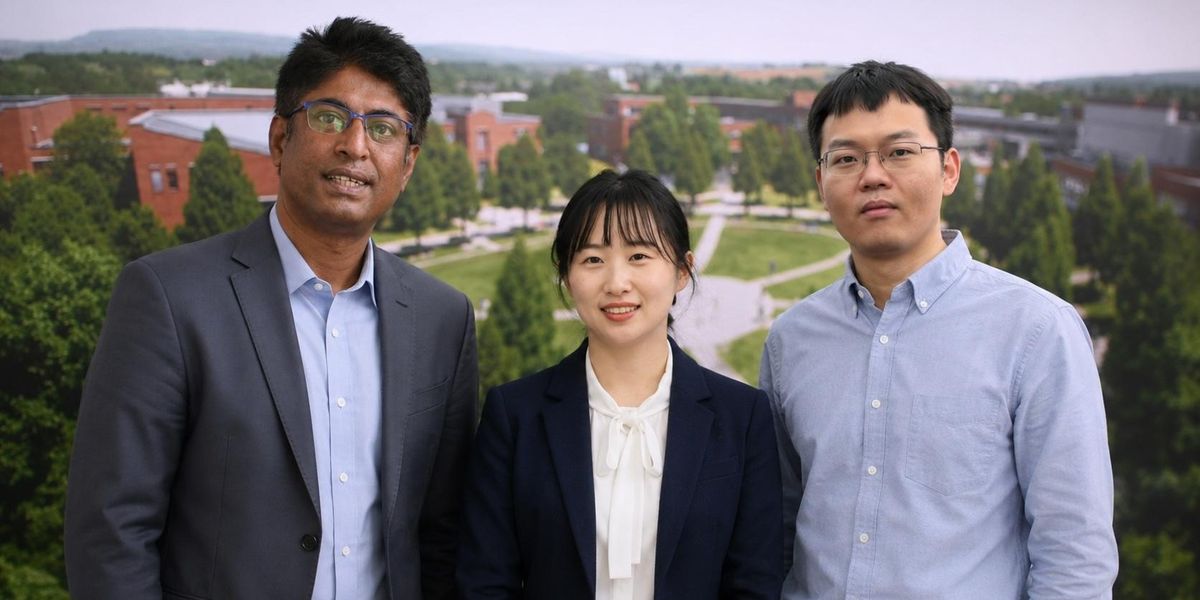
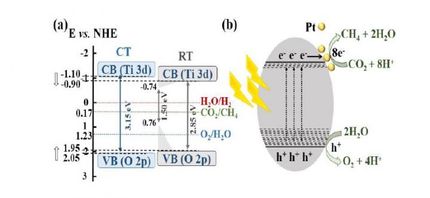
“Against this background, we have developed a new approach in which carbon dioxide serves as the oxygen source for oxidation reactions. This breakthrough transforms CO₂ from a purely inert greenhouse gas into a valuable synthetic reagent,” says Prof. Dr. Shoubhik Das, Chair of Organic Chemistry I at the University of Bayreuth and senior author of the study. In their work, the researchers demonstrate for the first time a light-driven oxygen transfer system that directly uses CO₂ for the oxidative cleavage of alkenes under ambient conditions. Many plastics are derived from alkenes, making these substances highly important for industry. “Enabled by a robust iron-based heterogeneous photocatalyst, the reaction proceeds at room temperature and normal pressure without the use of hazardous oxidising agents or pressurised oxygen. This makes the reaction safer than conventional oxidations,” Das explains. The light-driven nature of the reaction also makes the approach energy-efficient.
“Beyond establishing a new reaction, our approach opens up a pathway for oxidation processes that meet the growing demands for industrial safety, sustainability and green production. Ultimately, our research contributes to a future in which fundamental chemical transformations are developed with safety, sustainability and environmental responsibility in mind,” says Das.
The study arose from an international collaboration between the University of Bayreuth, the Leibniz Institute for Catalysis, the CNR Institute of Chemistry of Organometallic Compounds, the CNR Institute for Chemical and Physical Processes, Stockholm University, Jagiellonian University, the State Key Laboratory of Low Carbon Catalysis and Carbon Dioxide Utilisation, and Politecnico di Milano. The work was funded by a DTU grant (2035-00147B) and start-up funding from the University of Bayreuth.
Original publication
Yuman Qin, Peng Ren, Jun Hu, Suman Pradhan, Thanh Huyen Vuong, Xiufang He, Lulu Alluhaibi, Nils Rockstroh, Susanna Monti, Giovanni Barcaro, Aleksander Jaworski, Piotr Kuśtrowski, Jabor Rabeah, Daniel Hohenberger, Sergey Bagnich, Anna Köhler, Josef Breu, Gianvito Vilé, Matthias Beller, Shoubhik Das; "Photocatalyzed oxidative cleavage of alkenes using CO2 as an oxygen donor"; Science, Volume 392


Other news from the department science














Most read news









More news from our other portals

























See the theme worlds for related content
Topic world Synthesis
Chemical synthesis is at the heart of modern chemistry and enables the targeted production of molecules with specific properties. By combining starting materials in defined reaction conditions, chemists can create a wide range of compounds, from simple molecules to complex active ingredients.

Topic world Synthesis
Chemical synthesis is at the heart of modern chemistry and enables the targeted production of molecules with specific properties. By combining starting materials in defined reaction conditions, chemists can create a wide range of compounds, from simple molecules to complex active ingredients.