New Shape-Changing Catalysts for the Energy Transition
New Perspectives for Efficient Processes in the Chemical Industry

Advertisement


Researchers from the Inorganic Chemistry – Functional Ceramics research group at the University of Koblenz have presented an innovative approach to developing sustainable and high-performance catalysts. These catalysts can dynamically adapt to different chemical reaction conditions. The research findings, published in the open-access scientific journal *Nature Communications*, open up new possibilities for efficient processes in the chemical industry—particularly in the context of the energy transition.
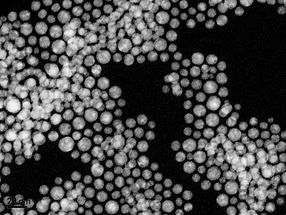
The study focuses on so-called shape-changing bimetallic iron-nickel catalysts. These were produced from a ceramic structure using solid-state reactions. By precisely controlling the reduction temperature, two different nanostructures were produced: either alloyed iron-nickel nanoparticles or complex core-shell structures composed of oxide and alloy.
A particular advantage of the developed system is its reversibility: oxidative regeneration allows the original ceramic to be restored, enabling repeated switching between the different nanostructures. This structural adaptability allows the catalyst to switch selectively between two important reaction pathways: the dry reforming of ethane with carbon dioxide and the CO₂-assisted oxidative dehydrogenation of ethane. Both reactions help reduce greenhouse gas emissions by using carbon dioxide as a feedstock, while also enabling the production of valuable chemical feedstocks.
“Our results show that catalytic properties can be specifically controlled by dynamically altering the structure of the material,” explains Prof. Dr. Simone Mascotto, head of the research group. “This not only enables high selectivity but also remarkable stability over many reaction cycles.”
The repeated redox cycles confirmed that both the structural changes and the catalytic performance are largely reversible. This strategy thus represents a promising approach for the development of regenerable, multifunctional catalysts that can be flexibly adapted to industrial requirements.
Note: This article has been translated using a computer system without human intervention. LUMITOS offers these automatic translations to present a wider range of current news. Since this article has been translated with automatic translation, it is possible that it contains errors in vocabulary, syntax or grammar. The original article in German can be found here.
Original publication



Other news from the department science