Energy Providers as Raw Material Suppliers: Geothermal Energy to Supply Lithium for Batteries
Five Factors for the Success of Domestic Lithium from Geothermal Energy
Advertisement


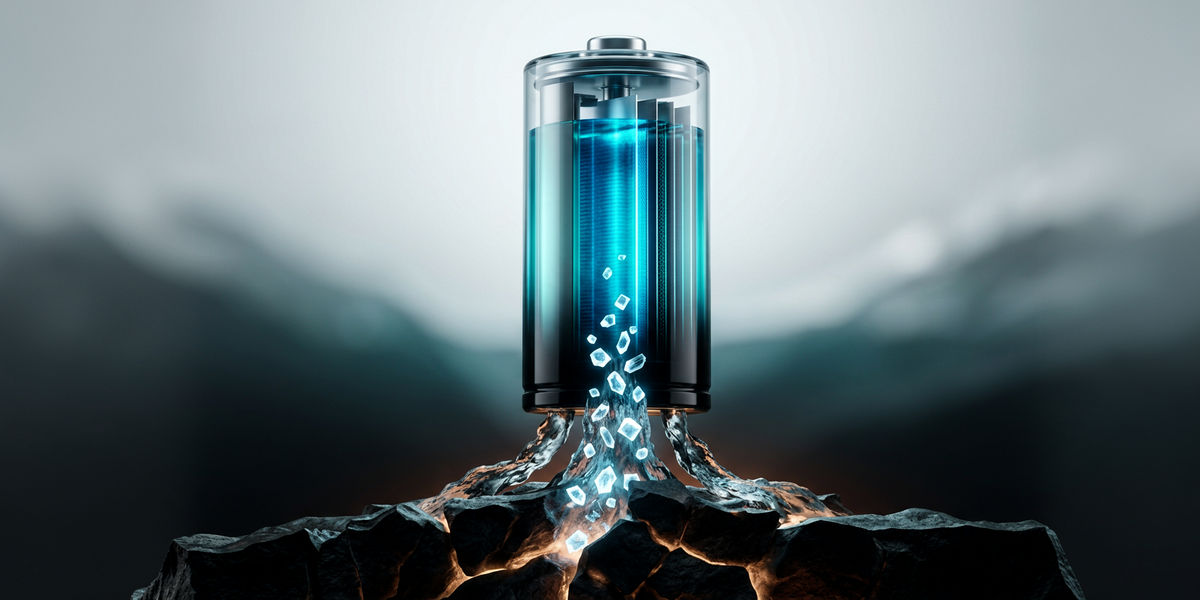
Fuel prices, security of supply, and dependence on raw materials are presenting energy providers with new challenges. Researchers at Fraunhofer IEG are investigating how heat and strategic raw materials can be extracted from the subsurface simultaneously. The idea: Hot deep groundwater provides heat for heating networks and industry—and, at the same time, lithium for batteries. This reduces costs, boosts regional economic value, and ensures a sustainable heat supply for the future. Fraunhofer IEG and its partners outline the key factors necessary for success in a scientific paper published in the journal *Geothermics*.
“We want to make geothermal energy doubly valuable: it can provide clean heat and, at the same time, strategic raw materials such as lithium,” says Dr. Katharina Alms of Fraunhofer IEG. Water from depths of several kilometers contains not only energy but also dissolved metals. Using the North German Basin as an example, the study shows how these resources can be tapped together. For operators of geothermal plants, this would create a second source of revenue in the long term through additional income generated by existing infrastructure via the production of lithium or copper. Currently, there are three research sites and five commercial sites that utilize hydrothermal energy from deep reservoirs in the North German Basin. More than 50 additional sites are in the planning phase.
High Potential Underground
Hot, saline waters containing significant amounts of lithium metal circulate underground in northern Germany. Concentrations of up to 600 milligrams per liter can occur in deep sandstones. The estimated total potential in the North German Basin is up to 26.5 million metric tons of lithium metal (equivalent to 141 million metric tons of marketable lithium carbonate). Lithium is key to batteries and energy storage. Demand is rising sharply. Domestic production reduces dependence on imports and strengthens security of supply. Through geothermal energy, energy providers could become both heat generators and suppliers of lithium raw materials.
How the combined use works
The basic idea behind geothermal energy is simple. A well extracts hot water from a depth of several thousand meters. At the surface, the heat is transferred to a district heating network or used in industrial processes. The water then flows through a system that specifically filters out lithium. The deep water is then returned to the subsurface. Researchers have combined geological data, laboratory analyses, and technical models—such as production rates, concentrations, and efficiency levels—to provide site-specific forecasts of how much lithium can be expected. As a rough rule of thumb, a typical geothermal plant should be capable of producing several metric tons of lithium carbonate per year.
An Economic Lever for the Heat Transition
This combined use significantly improves the economic viability of geothermal energy. Additional revenue from lithium helps offset the high initial investment costs for drilling. This makes projects more attractive to geothermal plant operators, energy utilities, and industry. At the same time, new local value chains are created. This strengthens the resilience and independence of energy systems.
Challenges in Implementation
The technology for lithium extraction has already been tested but is still in the transition to industrial application. Initial pilot projects worldwide demonstrate feasibility, but large-scale plants are still under construction. For economically viable domestic lithium production, five factors must align:
- Is there sufficient lithium dissolved in deep groundwater and is it available in the long term?
- Can deep groundwater be brought to the surface at a sufficient flow rate?
- Do heat recovery and raw material extraction complement each other in a technically efficient manner?
- Can tools and materials withstand the demanding conditions underground?
- Are environmental sustainability, regulatory approval, and public acceptance in place?
“Domestic lithium production will only work if geology, technology, operations, and public acceptance all align,” emphasizes Katharina Alms. “For energy providers and industry, this means that success lies not only in the raw material itself, but in a comprehensive understanding of the entire subsurface and the integration of the facilities.” Geothermal energy can do more than just provide heat. Combined with the extraction of strategic raw materials, it becomes a central building block for a sustainable, resilient, and economically viable energy supply.
Note: This article has been translated using a computer system without human intervention. LUMITOS offers these automatic translations to present a wider range of current news. Since this article has been translated with automatic translation, it is possible that it contains errors in vocabulary, syntax or grammar. The original article in German can be found here.
Original publication



Other news from the department science













Most read news







More news from our other portals























See the theme worlds for related content
Topic World Battery Technology
The topic world Battery Technology combines relevant knowledge in a unique way. Here you will find everything about suppliers and their products, webinars, white papers, catalogs and brochures.

Topic World Battery Technology
The topic world Battery Technology combines relevant knowledge in a unique way. Here you will find everything about suppliers and their products, webinars, white papers, catalogs and brochures.