64% of Germany's plastic waste is incinerated instead of being recycled
New VDI guideline aims to standardize terminology, procedures, and quality standards throughout the value chain

Advertisement


plastics are an integral part of our lives: our clothing is made of synthetic fibers, our household appliances have plastic casings, and our food and hygiene products are packaged in plastic. And when we no longer need these items, they often end up in waste-to-energy plants or in rivers.
660 metric tons of plastic waste from the Rhine into the North Sea each year
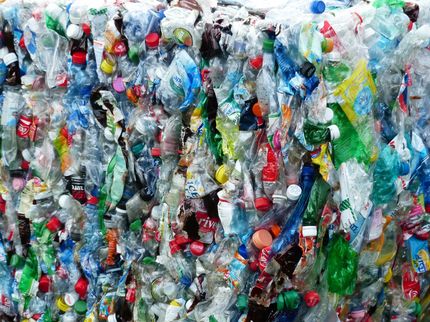
In 2023, for example, of the 5.58 million metric tons of plastic waste collected from households (post-consumer waste) in Germany, 64% was used for energy recovery—that is, incinerated [1]. Up to 660 metric tons of plastic waste flow into the North Sea annually via the Rhine alone [2].
Plastics can be easily recycled, so much larger quantities could be recycled than has been the case so far. To achieve this, plastic products must be designed to last a long time, be reusable, and be easy to repair. When they reach the end of their useful life, smart solutions are needed to collect plastic waste as completely as possible and send it for recycling. This allows new products to be created from it.

The potential of recycled plastic is far from exhausted
Technically speaking, high-quality recycled plastics can now be successfully used in new products—from school art sets and baby bottles to power tools. The recycling technologies currently available are well-established, but due to a lack of integration between product development, production, and recycling, as well as inconsistent legal and technical frameworks, the potential for using recycled materials is still far from being fully realized. A mere 35% of the post-consumer plastic waste collected in Germany was recycled in 2023. And while 8.82 million metric tons of new plastics were produced in Germany from fossil raw materials, only 2.01 million metric tons of recycled plastic were produced. [1]
VDI Guideline 4095 E Aims to Advance the Circular Economy and Recycling of Plastics
The new VDI Guideline 4095 E, “Assessment of Plastics in the Circular Economy,” aims to contribute to advancing the circular economy and the recycling of plastics in Germany. To this end, it consolidates the key terms, legal frameworks, recycling processes, and evaluation methods for plastics in the circular economy, thereby establishing a common language for all stakeholders along the value chain. The goal is to facilitate the use of high-quality recycled materials, increase planning and investment certainty, and accelerate the transition from individual pilot projects to an industrially established circular economy. The standardization of knowledge, processes, and quality requirements enables the sustainable use of plastics within the economic cycle.
Plastics recycling reduces dependence on imports
Keeping plastics in circulation over multiple life cycles is not only a matter of environmental protection but also of competitiveness and geopolitical sovereignty. The vast majority of virgin plastic is derived from petroleum. Since Germany has no significant domestic reserves, it relies on imports for its plastic needs and is therefore dependent on major oil-exporting countries and functioning supply chains. In the event of global crises, rising prices have a direct impact on the German economy. For example, in the event of a war with Iran and the closure of the Strait of Hormuz, the price of newly produced LDPE—a type of polyethylene—rose by 72% from January to May 2026. By contrast, the price of recycled LDPE rose by only 8%. [3] Since regranulates are integrated into regional material cycles, their price is far less dependent on global fluctuations. Instead, a challenge for the German recycling industry is securing sufficient high-quality feedstock.
The VDI 4095 E guideline “Assessment of Plastics in the Circular Economy” was published as a draft in September 2026. Comments on the draft may be submitted until February 28, 2027.
[1] Conversio Market & Strategy GmbH (2024) Material Flow Map of Plastics in Germany 2023 – Industry Association Study.
[2] Gnann, N., Höreth, K., Schweigert, N. et al. The Rhine River transports approximately 4,000 metric tons of macro-litter toward the North Sea each year. Commun. Sustain. 1, 5 (2026). https://doi.org/10.1038/s44458-025-00007-5
[3] https://www.k-zeitung.de/rohstoffpreise-kunststoffe-marktbericht (accessed Aug. 11, 2026)
Note: This article has been translated using a computer system without human intervention. LUMITOS offers these automatic translations to present a wider range of current news. Since this article has been translated with automatic translation, it is possible that it contains errors in vocabulary, syntax or grammar. The original article in German can be found here.
Original publication


Other news from the department business & finance