An Enzyme That Offers Hope: Novel Plastic-Degrading Enzyme Discovered in Bacteria
"Pac-Man Enzyme" breaks down polyester plastic while simultaneously splitting penicillin
Advertisement


Researchers at the University of Konstanz have discovered a new “Pac-Man enzyme” in bacteria that can break down polyester plastic as well as antibiotics such as penicillin. This lays a new foundation for research on microbial plastic degradation as well as for our understanding of the spread of antibiotic resistance in the environment, including its evolution.
Huge amounts of plastic waste accumulate in the oceans in so-called“Great Garbage Patches”and spell disaster for the organisms living there. This is because the synthetic plastic polymers used today can be broken down biologically—that is, by microorganisms—only very slowly. Instead, the physical fragmentation of the materials leads to micro- and nanoplastics. However, microbes colonize the plastic waste found in the environment, forming a biofilm in a unique microbial habitat that researchers refer to as the “plastosphere.”
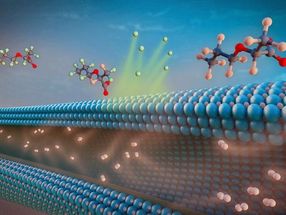
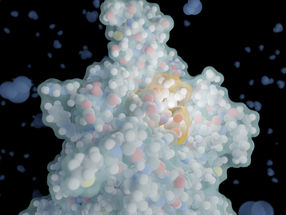
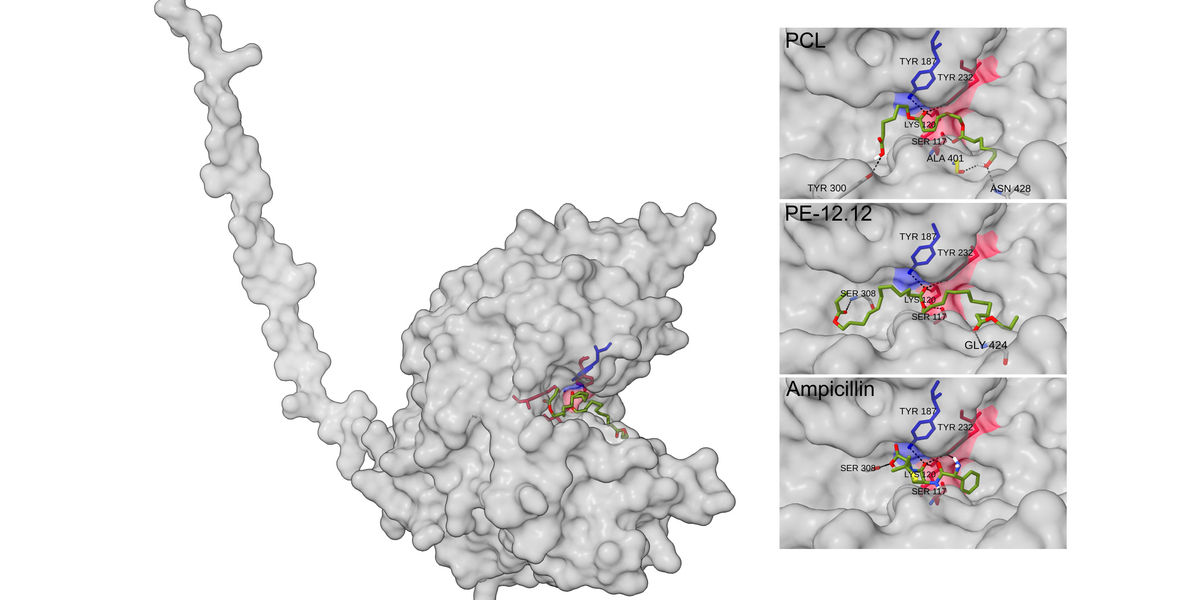
A newly discovered enzyme in these bacteria raises hopes that microorganisms could specialize in breaking down plastic faster than expected. A research team at the University of Konstanz discovered this previously unknown enzyme, which not only breaks down certain types of polyester and bioplastics but also confers antibiotic resistance to the bacteria. Due to its structure, which features a wide-open active site, the researchers have dubbed this “plastic-eater” the “Pac-Man enzyme.” Humans can support the breakdown of plastic in the environment by, ideally, using only bioplastics that can be broken down by microorganisms.
The Research Project
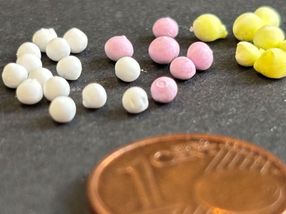
In their research project, Konstanz biologists Harry Lerner and David Schleheck investigated the complete microbial degradation of bioplastics. At the same time, they studied the composition and the entire genetic information (the metagenome) of the microbial community involved. The study used bioplastic materials developed by the group led by chemist Stefan Mecking—known as long-chain aliphatic polyesters (LCAP). Their joint study has now been published in*The ISME Journal *.
How did the research team conduct their study? “We buried small pieces of LCAP bioplastic film in the top layer of humus in the forest of the university’s botanical garden, about ten centimeters deep,” explains Harry Lerner. “This is the layer where the degradation of cellulose and other natural polymers, such as cutin—a plant-based polyester—takes place.” At the same time, the team mixed a powder of the bioplastic into samples of the same forest soil in the laboratory. The samples in the forest were left undisturbed for an entire year, while for the samples in the lab, the degradation of the materials—as measured byCO₂ production and thus microbial respiration—was tracked in great detail, also over the course of an entire year. “Cellulose, other types of bioplastics such as PHBV and PCL, as well as hard plastic (HDPE) and untreated soil as a negative control, served as references in the laboratory. We were able to demonstrate complete degradation of all bioplastic materials within about 250 to 330 days, of cellulose after about 80 days, while practically nothing happened with HDPE,” Lerner explains.
An Unexpected Discovery
A surprise awaited the researchers when they examined the films collected from the forest floor: Under the electron microscope, it became apparent that microscopic holes had formed in the film. And these holes were exactly the size and shape of individual bacterial cells. “We hypothesized that bacteria might be coated with plastic depolymerases firmly anchored to their cell surfaces, effectively digesting their way into the material and thus sinking into the film. In the process, they leave behind such tiny holes,” explains Lerner.
To find out which microbes accumulate in the soil samples during the degradation of the bioplastic materials and which enzymes are responsible for breaking down the materials, Harry Lerner extracted the total DNA from the soil microbial community, sequenced it, and analyzed the large amounts of data with great patience and care. The microbiologists found a gene that had become highly enriched in the forest soil containing LCAP. It encodes a so-called esterase enzyme that possesses both a secretion signal—a kind of address label for export outside the cell, so to speak—and a so-called membrane anchor (lipid anchor). The latter enables the enzyme to bind firmly to the cell surface. The “Pac-Man enzyme” had been found.
The enzyme revealed yet another surprise: “It shows a structural similarity not only to esterases but also to beta-lactamases—that is, bacterial enzymes capable of cleaving the beta-lactam ring of certain antibiotics, such as penicillin, thereby conferring antibiotic resistance on bacteria,” said Lerner. And indeed, the researchers were able to demonstrate the enzyme’s dual biochemical function—breaking down polyesters into monomers on the one hand and cleaving penicillin on the other—in the laboratory as well.
A Paradigm Shift in the Plastosphere?
“In our environment, the plastosphere is a new habitat,” emphasizes Schleheck. “Humans have only been introducing plastic into the environment in significant quantities for about 50 to 75 years. Since then, it has essentially been available to microbial communities—such as bacteria, yeasts, and fungi—as an additional carbon and energy substrate for their growth. By ‘in theory,’ I mean that they would certainly like to use the plastic as a growth substrate—but they can’t, because the materials are practically indigestible for microbial metabolism and are therefore hardly broken down at all.”
At least until now. The “Pac-Man enzyme” could now signal a turning point, indicating that some microorganisms are now specializing entirely in plastic degradation. “That gives me personal hope, because it looks as though bacteria might be able to specialize in breaking down polyester plastics more quickly than expected. For solving the problem of plastic in the environment, this means that we humans must meet the microbes halfway and, ideally, use only polymers in the future that possess such biochemical weak points as the hydrolyzable ester bonds in polyesters—for example, in LCAP or other types of bioplastics,” says Schleheck.
Note: This article has been translated using a computer system without human intervention. LUMITOS offers these automatic translations to present a wider range of current news. Since this article has been translated with automatic translation, it is possible that it contains errors in vocabulary, syntax or grammar. The original article in German can be found here.
Original publication


Other news from the department science