Ultra-thin two-dimensional materials observed for the first time in a state between solid and liquid
New insights into phase transitions at the atomic level in real materials
Advertisement


When ice melts into water, this happens quickly, the transition from solid to liquid is immediate. However, very thin materials do not adhere to these rules. This is where an unusual state between solid and liquid arises: the hexatic phase. Researchers at the University of Vienna have now succeeded in directly observing this exotic phase in an atomically thin crystal. Using state-of-the-art electron microscopy and neural networks, they filmed a graphene-protected silver iodide crystal as it melted. Ultra-thin, two-dimensional materials enabled researchers to directly observe melting processes at the atomic level. The new findings contribute significantly to our understanding of these phase transitions. Surprisingly, the observations contradict earlier predictions - a result that has now been published in Science.
When ice melts, everything happens very quickly: as soon as the melting temperature is reached, the solid, ordered structure of the ice abruptly transforms into liquid, disordered water. Such an abrupt transition is typical of the melting behavior of all three-dimensional materials, from metals and minerals to frozen drinks.
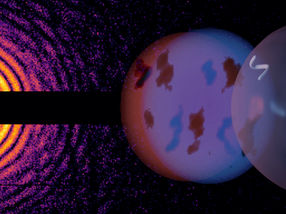
However, when a material becomes so thin that it is practically two-dimensional, the rules of melting change drastically. Between the solid and liquid phases, a new, exotic intermediate phase of matter called the "hexatic phase" can emerge. This hexatic phase, which was first predicted in the 1970s, is a strange hybrid state. The material behaves like a liquid, in which the distances between the particles are irregular, but to a certain extent also like a solid, as the angles between the particles remain relatively well ordered.
As this phase has so far only been observed in much larger model systems such as densely packed polystyrene spheres, it was previously unclear whether it could also occur in everyday covalently bonded materials. The international research team led by the University of Vienna has now succeeded in demonstrating precisely this: the scientists were able to observe this process for the first time in atomically thin crystals of silver iodide (AgI), thus solving a decades-old mystery. Their results not only confirm the existence of this elusive state in strongly bound materials, but also provide surprising new insights into the nature of melting in two dimensions.
"Graphene sandwiches" make the new observation possible
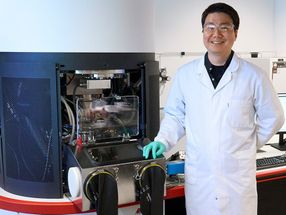
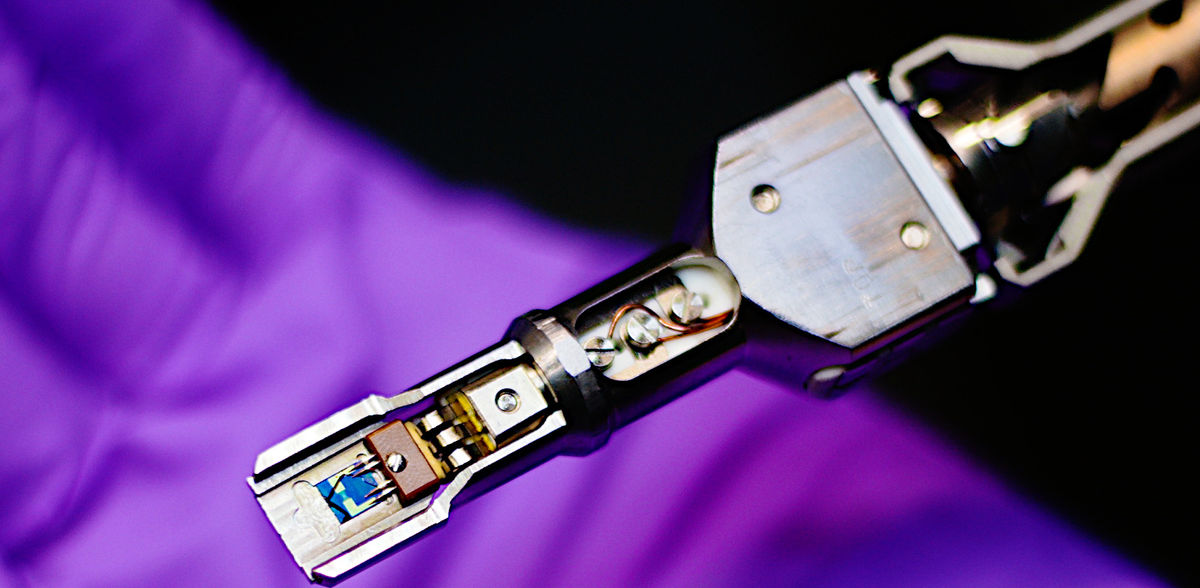
To achieve this breakthrough, the researchers developed an ingenious method for studying the melting process of fragile, atomically thin crystals. They embedded a single layer of a silver iodide crystal between two layers of graphene. This protective "sandwich" prevented the fragile crystal from folding in on itself during the melting process. Using a state-of-the-art scanning transmission electron microscope (STEM), the team gradually heated the sample to over 1,100 °C and filmed the melting process in real time at the atomic level.
"Without the use of AI tools such as neural networks, it would have been impossible to track all these individual atoms," explains Kimmo Mustonen from the University of Vienna, senior author of the study. The team trained the network with huge amounts of simulated data sets before processing the thousands of high-resolution images generated by the experiment.
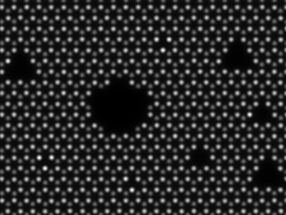
Their analysis revealed a remarkable result: within a narrow temperature window - about 25 °C below the melting point of AgI - a distinct hexatic phase appeared. Complementary electron diffraction measurements confirmed this finding and provided strong evidence for the existence of this intermediate state in atomically thin, strongly bound materials.
A new chapter in the physics of melting
The study also revealed an unexpected twist. According to previous theories, the transitions from solid to hexatic and from hexatic to liquid should be continuous. However, the researchers observed that while the transition from solid to hexatic was indeed continuous, the transition from hexatic to liquid was abrupt, similar to the melting of ice into water. "This suggests that melting in covalent two-dimensional crystals is far more complex than previously thought," says David Lamprecht from the University of Vienna and the Vienna University of Technology (TU), one of the lead authors of the study alongside Thuy An Bui, also from the University of Vienna.
This discovery not only challenges long-standing theoretical predictions, but also opens up new perspectives in the study of materials at the atomic level. "Kimmo and his colleagues have once again shown how powerful atomic-resolution microscopy can be," says Jani Kotakoski, head of the research group at the University of Vienna.
The results of the study not only deepen our understanding of melting in two dimensions but also underline the potential of advanced microscopy and AI in exploring the frontiers of materials science.
Note: This article has been translated using a computer system without human intervention. LUMITOS offers these automatic translations to present a wider range of current news. Since this article has been translated with automatic translation, it is possible that it contains errors in vocabulary, syntax or grammar. The original article in German can be found here.
Original publication



Other news from the department science