Water spider and fish scale bioinspiration drives Janus air electrode for advanced zinc-air batteries
Biomimetic design optimizes wettability gradient to enhance battery performance
Advertisement


zinc-air batteries (ZABs) are recognized as a promising option for next-generation sustainable energy storage, thanks to their high theoretical energy density, eco-friendliness, and cost-effectiveness. However, their practical deployment has been limited by slow oxygen reduction reactions (ORR) on air electrodes and inefficient mass transport of reactants and products—issues closely related to the structural constraints of traditional air electrodes.
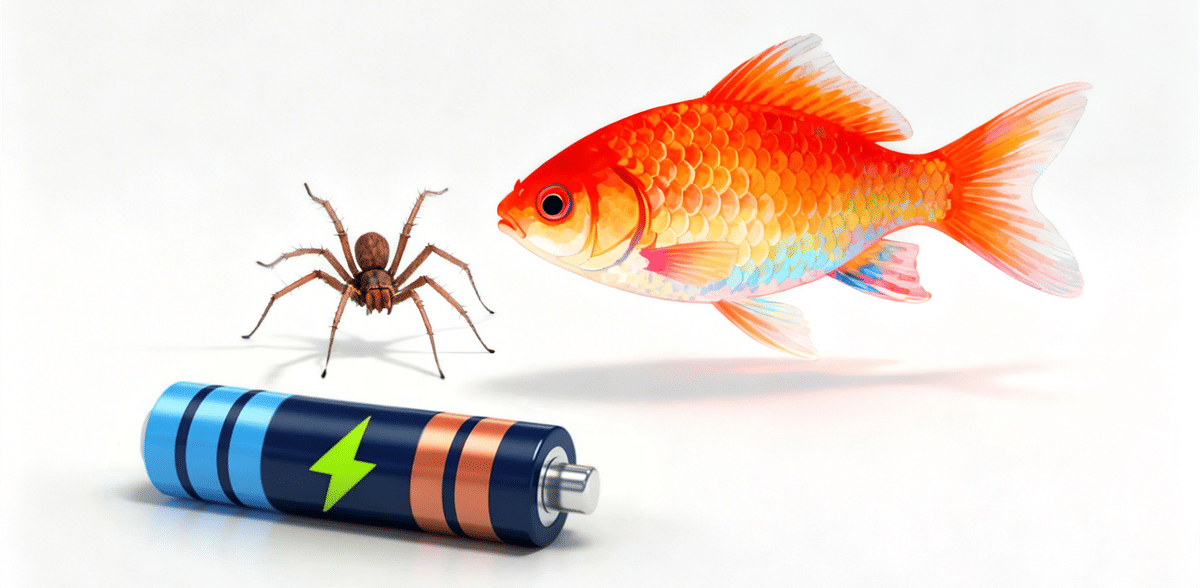
To address these challenges, a research team from Jiangsu University of Science and Technology turned to nature for inspiration, developing an innovative asymmetric air electrode through a simple carbonaceous assembly strategy. Two components, which are functionalized graphene nanosheets (FGNSs) and carbon nanotubes (FCNTs) both anchoring iron phthalocyanine for oxygen reduction catalysis, are employed as building blocks. The former assemble into fish-scale-like hydrophilic lamellar structure facing the electrolyte, facilitating swift ion infiltration; while the latter arrange into waterspider-leg-like hydrophobic villus structure exposed to ambient air, enhancing rapid oxygen invasion.
The conscious asymmetric architecture (Asy-FCNTs-FGNSs) establishes a continuous wettability gradient, which dramatically extends the three-phase reaction zone (solid catalyst/liquid electrolyte/gaseous oxygen) and enables rapid substance transport—oxygen from air to catalyst, and ions from electrolyte to active sites. These structural optimizations effectively improve catalytic site utilization and structural durability, which directly translate to improved battery performance.
Experimental validation confirms significantly enhanced performance in zinc-air batteries equipped with this bioinspired electrode, achieving a peak power density of 239.3 mW cm−2, a specific capacity of 814.3 mAh g−1 at 10 mA cm−2, and stable cycling of 3696 cycles at 10 mA cm−2. This performance outperforms conventional symmetric electrodes and state-of-the-art self-supporting air electrodes reported in previous studies.
Beyond performance gains, the design offers a scalable and cost-effective fabrication process. By directly leveraging the optimized structures of waterspider legs and fish scales, combined with a straightforward carbonaceous assembly method, the research provides an innovative paradigm for electrode architecture optimization—one that could inform the development of advanced energy storage devices beyond zinc-air batteries.
Original publication


Other news from the department science










Most read news







More news from our other portals





















See the theme worlds for related content
Topic World Battery Technology
The topic world Battery Technology combines relevant knowledge in a unique way. Here you will find everything about suppliers and their products, webinars, white papers, catalogs and brochures.

Topic World Battery Technology
The topic world Battery Technology combines relevant knowledge in a unique way. Here you will find everything about suppliers and their products, webinars, white papers, catalogs and brochures.