How are 360,000 tons of used batteries per year turned into a treasure trove of raw materials?
Increasing profitability and recyclability through direct recycling
Advertisement


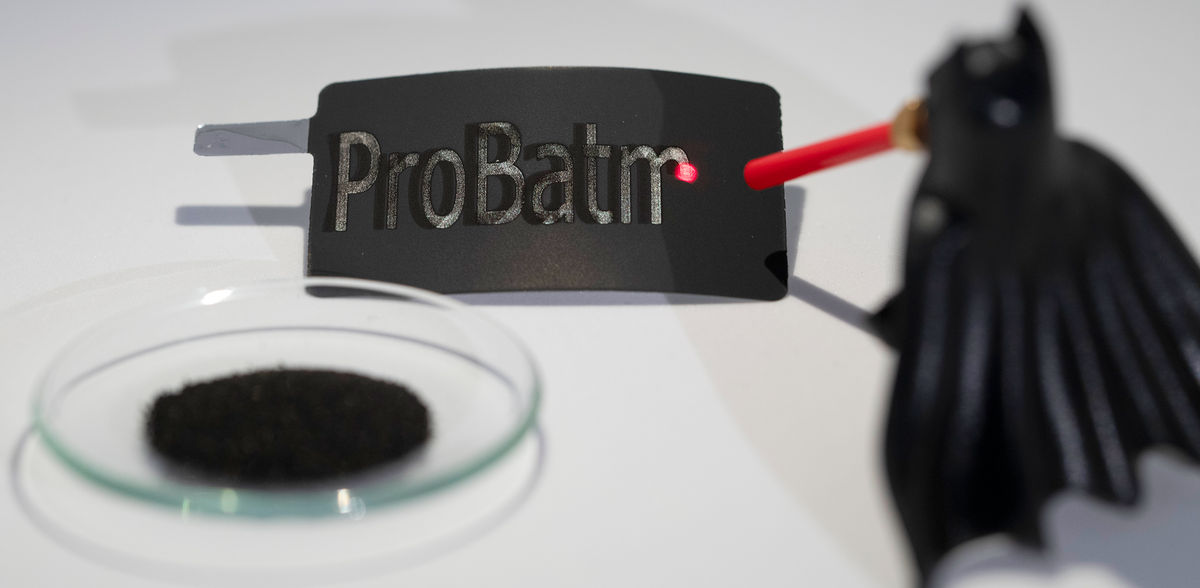
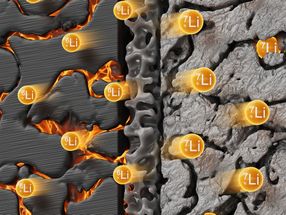
What will happen in the future to used batteries from electric vehicles? How can their valuable materials be recycled efficiently to create a genuine cycle for lithium-based batteries? With its research and development activities, the Fraunhofer R&D Center for electromobility (FZEB) is conducting research and development into efficient and sustainable solutions for battery recycling in Germany. Now, another joint project by battery researchers and industry has been launched for the direct recycling of battery materials: ProBatman, which aims to optimize the process steps along the entire recycling process chain in terms of purity and yield.
Electromobility has gained momentum – worldwide and also in Germany. What happens when relevant batteries are taken out of service? From 2040 onwards, up to 360,000 metric tons of end-of-life lithium-ion batteries are expected annually. Treating them as waste would be a waste of resources. The currently established pyrometallurgical and hydrometallurgical recycling processes for lithium batteries only target some of the materials used in lithium-ion batteries. In addition, they require high energy consumption or large amounts of auxiliary materials and are therefore not efficient enough. With the right technologies, end-of-life batteries can not only serve as a source of critical raw materials, but also provide the functional materials that have already been processed, thus saving energy and resources. The necessary technologies must now be further developed, optimized, and scaled up so that they are available in time.
In line with the German sustainability strategy and the EU Battery Regulation, the recently launched ProBatman project aims to recover as many material components as possible from used batteries. The project, coordinated by Netzsch-Gerätebau GmbH, sees ambitious potential in direct recycling and the comparative resynthesis and reuse of recovered raw materials. ProBatman's processing of the 340,000 metric tons of used batteries predicted annually from 2040 onwards could save up to 1.3 gigatons of CO₂-equivalents (1 Gigaton = 1 billion tons) .
Increasing Profitability and Recyclability Through Direct Recycling
Modern Li-ion battery materials contain neither nickel nor cobalt, which will make the use of hydro- or pyrometallurgical processes less profitable. ProBatman therefore consistently focuses on the recovery of volatile components and guide salts. This is taken into account from the very first step—the safe opening of the battery cells under inert gas. Separation of the lithium-ion-storing active materials from the electrodes, as well as the subsequent debinding and sorting, are also to be carried out as carefully and precisely as possible using new technologies. The recovered materials are analyzed, cleaned, and regenerated in a specific way for reuse, depending on their type.
Focus on Safety, Transferability, and Technological Maturity
The technologies required for the individual process steps will be tested in terms of their scalability, environmental friendliness, and other safety aspects. At the same time, all available process parameters and material data will be evaluated as part of a prospective life cycle analysis in order to identify further optimization potential and gradually transfer the technologies to a higher level of maturity. This should make the entire recycling process attractive for battery manufacturers and specialized recycling companies.
With project partners BMW AG, EurA AG, Fraunhofer ISC, Netzsch Group, and the University of Würzburg, an experienced project consortium is ready to tackle the technological hurdles. The consortium is supported by IBU-tec advanced materials AG, Trumpf Laser- und Systemtechnik SE, Jungheinrich AG & Co. KG, Zahner Elektrik GmbH & Co. KG, and Delfortgroup AG.
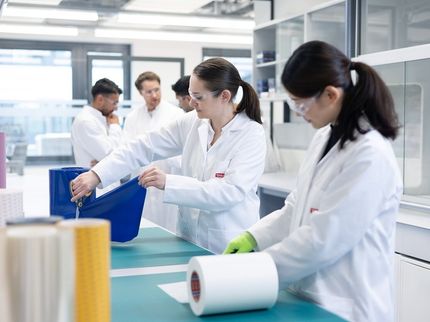
The Fraunhofer R&D Center for Electromobility (FZEB) at the Fraunhofer Institute for Silicate Research ISC began focusing on the direct recycling of lithium-ion batteries in its own research several years ago. In a series of projects, the classification (i.e., separation by type) and recovery of lithium iron phosphate using semi-continuous centrifuges was demonstrated, and research on the regeneration of various active materials was initiated. In order to move closer to the major goal of a sustainable and recyclable lithium-ion battery, design-for-recycling approaches and the benefits of digital twins are also currently being researched. In addition, Fraunhofer ISC is contributing scientific expertise in materials research and analytics for lithium-ion batteries as well as its own pilot production facility for pouch cells to the project.


Other news from the department science





These products might interest you
Most read news




More news from our other portals



















See the theme worlds for related content
Topic World Battery Technology
The topic world Battery Technology combines relevant knowledge in a unique way. Here you will find everything about suppliers and their products, webinars, white papers, catalogs and brochures.

Topic World Battery Technology
The topic world Battery Technology combines relevant knowledge in a unique way. Here you will find everything about suppliers and their products, webinars, white papers, catalogs and brochures.