Safe disposal of emulsions containing petroleum
Sensor system promises faster waste oil disposal
Advertisement


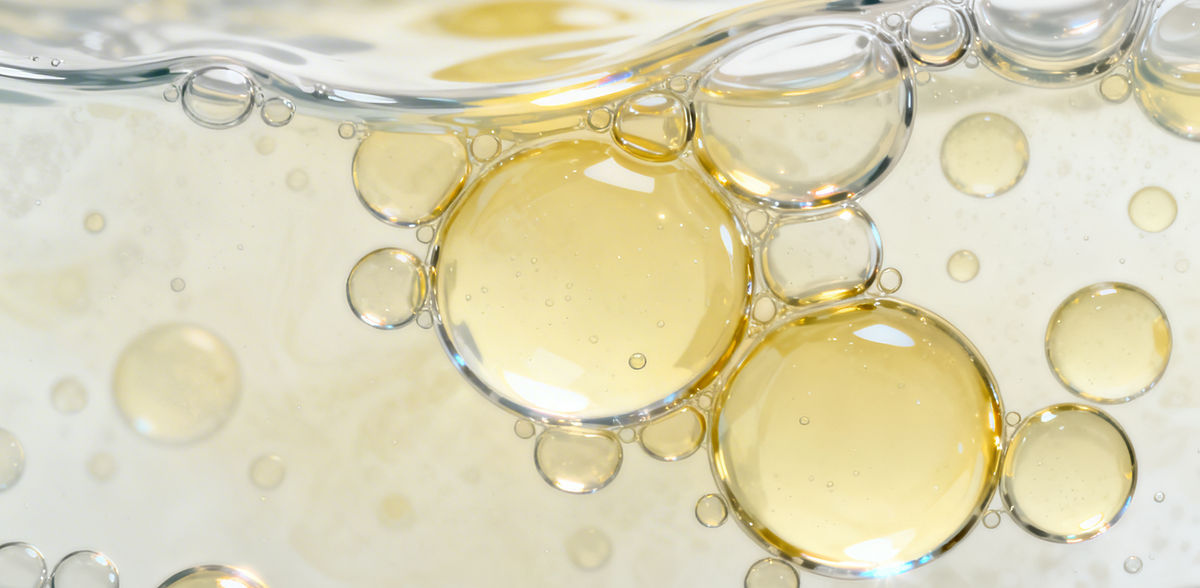
Emulsions made of water and petroleum are used in many industrial sectors, for example as coolants. Their disposal is complex because the components must be separated again. For his master’s thesis, Frank Ferrick Nokam Waffo, together with HFM Horst Fuhse Mineralölraffinerie GmbH, researched a method that allows this to be done safely and automatically.
In everyday life, emulsions are commonly found in products such as cosmetics or foods like mayonnaise. However, petroleum-based emulsions are also widely used in industry—for example in cooling or lubricating fluids. Strict European and national wastewater regulations prohibit such substances from entering the environment. “To be able to dispose of these materials, the oil and water must first be separated. This is done using additives that break the emulsion back down into its components. Ideally, a clear separation line between the two components—the oil phase and the water phase—is visible. The water can then be drained off and disposed of separately from the oil,” explains Frank Ferrick Nokam Waffo. He studied Process Engineering and Energy Technology in Bremerhaven and dedicated his master’s thesis at HFM Horst Fuhse Mineralölraffinerie GmbH to the disposal of petroleum-based emulsions. The company specializes in the handling and disposal of waste oil and cooling lubricants.
Current process often time-consuming
Despite advanced wastewater treatment systems, accurately detecting the oil-water boundary remains difficult due to factors such as emulsification, fluctuating flow rates, and varying oil concentrations. Currently, employees take samples and perform visual inspections manually, a process prone to error. If oil enters the water phase, this results in time-consuming, labor-intensive, and costly work to empty and clean parts of the wastewater treatment system. An automated solution could remedy this—but it faces a major challenge: the sensor used must reliably and precisely detect where the oil-water boundary lies. This varies with each emulsion, depending on factors such as the oil’s country of origin and oil content. A potential solution is a sensor that detects whether it is covered by water or oil and opens or closes the magnetic drain valve accordingly.
Frank Ferrick Nokam Waffo successfully tested both digital and analog sensors. “The results show that the digital sensor, through careful adjustment of its switching and reset thresholds, was able to effectively distinguish the oil-water interfaces despite variations in emulsion composition. This refined calibration, combined with precise timing control, produced consistent and repeatable separation results—creating clear oil and water phases,” Waffo explains. However, he also noted some practical limitations: “The reset point controlling the valve exhibited irregular and unpredictable behavior, partly due to the complexity of emulsion stability. Moreover, the magnetic drain valve tended to stick when handling high-viscosity oil emulsions, occasionally requiring manual intervention.”
Promising results
Despite the limitations, Waffo is very satisfied with his results. "It is possible to create a practical, automated emulsion separation system using standard PLC technology and capacitive level measurement. This can be adapted to different emulsion properties by systematically adjusting the sensors. The sensors still need to be recalibrated each time. A truly autonomous system would have to adapt to a combination of parameters that determine the stability of the emulsion," explains the graduate. In addition to the type of oil, these parameters include temperature, viscosity, pH value, original water content, and the duration and intensity of the mixing process. A two-hour mixing process with different devices can lead to very different results: higher intensity produces smaller droplets, which leads to much more stable emulsions that are more difficult to separate. It is also important to note that emulsions vary depending on the country of origin of the oil. “Different oils have different ratios of components such as asphaltenes or resins, which act as natural emulsifiers. These components stabilize the interface between oil and water and significantly alter the behavior of the emulsion during the automated separation process.”
The right technology is also important in this context. "A future-proof system should ideally use sensor fusion and combine capacitive measurements with other technologies, such as density or optical sensors. By using machine learning algorithms, the system could automatically adapt to these combined parameters and use pneumatic actuators to process highly viscous emulsions reliably and without manual intervention," concludes Waffo, who continues to work at HFM Horst Fuhse Mineralölraffinerie GmbH as deputy technical operations manager after graduating.


Other news from the department science