Merck upgrades full-year guidance and expects revenue of up to €21.4 billion
New CEO Kai Beckmann announces adaptation to the operating model

Advertisement


Merck delivered a solid start to fiscal 2026. In the first quarter, the Group generated moderate organic sales growth and sustained profitability. This was driven by Process Solutions and Semiconductor Materials, while strong foreign exchange effects continued to weigh on reported figures.
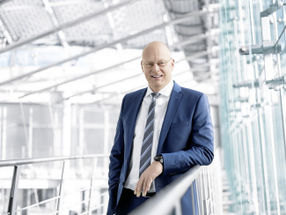
“Our first-quarter performance underlines the strength of the company’s diversified portfolio and its clear focus on complementary science and technology businesses,” said Kai Beckmann, Chairman of the Executive Board and Group CEO of Merck since May 1. “Based on our performance in the first quarter and our current market conditions, we upgrade our full-year 2026 financial guidance. At the same time, we sharpen the strategic direction of the company for the long-term. As markets, technologies and customer needs evolve, we will adapt Merck’s operating model and move towards a stronger focus on integrated workflow solutions for customers, expanding our offerings for customers and patients and bundling capabilities across our businesses.”
First-quarter results
In the first quarter of 2026, reported Group net sales reached € 5.1 billion (Q1 2025: € 5.3 billion). Despite organic growth of 2.9% compared with the year-earlier quarter, strong foreign exchange effects had an impact of –5.5%, resulting in a 2.8% decline in reported net sales. EBITDA pre grew by 5.3% organically and amounted to € 1.5 billion (Q1 2025: € 1.5 billion), with foreign exchange effects of –5.7%. This corresponds to an improved EBITDA pre margin of 29.8% (Q1 2025: 29.1%), supported by one-time effects in the Electronics business sector. Earnings per share pre came in at € 2.11, in line with the year-earlier quarter (Q1 2025: € 2.12). The development reflects disciplined cost management and differing contributions from all three business sectors, offset by negative foreign exchange effects.
Group performance shaped by solid demand
In the first quarter of 2026, Merck recorded solid demand across its portfolio. Despite ongoing macroeconomic uncertainty and geopolitical tensions, this development reflects resilience in the company’s attractive growth markets. Demand trends varied across regions and applications, underscoring the value of Merck’s diversified business model and global footprint.
Foreign exchange effects significantly weighed on reported sales and earnings at Group level, driven primarily by the development of the U.S. dollar against the euro as well as foreign exchange effects in key Asian markets. These effects are in line with the assumptions underlying the company’s guidance for the year.
Life Science benefits from growth across the business with innovation at its core
Life Science delivered a strong start to 2026, with organic growth across the business led by Process Solutions. The performance reflected the business sector’s breadth across research, development, manufacturing, and regulated applications, as well as a sharpened focus on operational effectiveness. Effective January 1, 2026, a new go-to-market model aligned the organization more closely with customer needs and purchasing journeys through three distinct business units: Process Solutions, Discovery Solutions and Advanced Solutions.
Net sales of Life Science grew by 2.2% to € 2.3 billion. Strong organic growth of 8.3% overcame foreign exchange effects of –6.0%. EBITDA pre was € 649 million, an increase of 4.2% year-on-year. Organic growth of 7.4% and portfolio effects of 1.6% surpassed foreign exchange effects of –4.8%.
Process Solutions, which offers solutions for every step of pharmaceutical manufacturing, remained the growth driver in the first quarter. Net sales grew organically by 16.2% and surpassed the threshold of € 1 billion. Growth was supported by strong momentum in downstream processing and single-use solutions, alongside limited safety stock building in response to regional developments as well as contributions from new customer projects. Order intake remained strong across the portfolio. On March 31, 2026, Life Science also closed the acquisition of JSR Life Sciences’ chromatography business. These technologies help improve productivity and support scalable biologics manufacturing.
Discovery Solutions, with its digital-first portfolio of biology and chemistry products for research and early-stage workflows, grew organically by 1.6%. Due to foreign exchange effects, net sales declined to € 692 million. The business unit’s performance was supported by continued demand from academic, biotech and pharmaceutical customers in a gradually improving research spending environment.
Advanced Solutions saw organic growth of 4.0%. However, foreign exchange effects and a small portfolio effect led to an overall decline of 2.7% to € 563 million. The business unit delivers tailored products and services that help customers address unique needs in high-touch and regulated environments. Performance was supported by demand for key solutions across the portfolio in quality-critical end markets such as diagnostics, testing and regulated manufacturing.
Life Science continued to increase its investment in R&D, expanding its portfolio with solutions for improved performance across research and biopharmaceutical manufacturing. Recent launches include the digitally enabled Milli-Q® CLX 8Series systems, which enable clinical labs to target 99.9% uptime of high-quality purified water. The FemtoQuest™ system enhances capabilities for ultrasensitive biomarker detection with up to 1,000 times greater sensitivity than traditional methods. Furthermore, Millipore Express® Ace supports more efficient and sustainable sterilizing-grade filtration, underlining Merck’s commitment to bringing greener alternatives to the market. These innovations help customers improve efficiency and performance across crucial research and manufacturing workflows.
Healthcare delivers stable performance amid portfolio dynamics
Sales in Healthcare were supported by treatments addressing rare diseases and cardiovascular, metabolic and endocrine diseases, while pricing and lifecycle effects continued to impact mature franchises. The business sector delivered net sales of € 2.1 billion and EBITDA pre of € 718 million in the first quarter of 2026.
Overall, net sales declined organically by 3.4%. Positive portfolio effects added 4.4 percentage points, while foreign exchange effects had an impact of –4.0%. EBITDA pre was down 9.7% year-on-year, due mainly to foreign exchange effects of –8.5% and follow-on costs associated with the acquisition of SpringWorks Therapeutics Inc., USA, in 2025.
The Rare Diseases franchise contributed significantly to the results, reflected as a portfolio effect of 4.4%. Net sales mainly include Ogsiveo®, which treats progressing desmoid tumors, and Gomekli®, approved for neurofibromatosis type 1. Following approval in China for the treatment of tenosynovial giant cell tumor (TGCT), pimicotinib has had an encouraging start and recorded its first sales in the first quarter of 2026.
The Cardiovascular, Metabolism & Endocrinology franchise grew by 1.2% organically against a tough comparative base in the year-earlier quarter. Main drivers were the diabetes medicine Glucophage® with organic growth of 6.3% and the thyroid medicine Euthyrox®, which grew by 5.8% organically.
In the Fertility franchise, Pergoveris®, indicated for the stimulation of follicular development in women, grew organically by 19.5% across all regions. This was more than offset by the organic decline of Gonal-f®, a follicle-stimulating hormone treatment, amid remaining net price effects in the United States.
Net sales of the Oncology franchise declined organically by 4.9% compared with the year-earlier quarter. Erbitux®, a treatment for metastatic colorectal cancer and for cancer of the head and neck, saw an organic decline of 3.3% due to competition from non-comparable biologics in China. Bavencio®, which is used to treat locally advanced or metastatic urothelial carcinoma, declined organically by 13.5% amid increasing competition.
In the Neurology & Immunology (N&I) franchise, Mavenclad®, indicated for relapsing forms of multiple sclerosis, saw an organic decline of 6.8% due to weaker demand in North America following the loss of market exclusivity in the United States. By contrast, organic sales continued to grow in Europe, the Middle East and Africa, and Latin America.
Healthcare continues to focus on strengthening its position in rare diseases, advancing its pipeline through both internal and external innovation, and building its portfolio for sustainable profitable growth. Recent progress includes the first patient dosed in the Phase III program, ELOWEN‑1 (NCT07332481) and ELOWEN‑2 (NCT07355218), evaluating enpatoran in people living with lupus who experience active skin manifestations. In addition, ongoing regulatory filings include pimicotinib in the United States and Europe; and the company is filing Pergoveris® for review under the U.S. FDA Commissioner's National Priority Voucher (CNPV) program.
Electronics supported by structural semiconductor trends
Electronics recorded continued solid performance in the first quarter of 2026, with net sales of € 817 million and EBITDA pre of € 282 million. Demand was supported by advanced semiconductor applications, including materials used in artificial intelligence and high‑performance computing.
Net sales grew organically by 4.2%. Due to portfolio effects of –10.6% and foreign exchange effects of –7.5%, reported net sales were lower year-on-year. EBITDA pre increased by 30.1% organically. This strong growth was driven by one-time effects from a reimbursement reflecting the recovery of costs incurred in connection with a non-quality-related supplier mislabeling dispute as well as the sale of OLED patents to Universal Display Corporation, USA. Foreign exchange effects had an impact of –9.2% and portfolio effects of –5.4%.
Semiconductor Solutions achieved strong organic growth of 7.5%. However, net sales declined slightly to € 640 million due to foreign exchange effects of –9.1%. Semiconductor Materials grew organically in the low-teens percentage range on the back of continued demand for high-value materials for AI chip systems and advanced nodes. Advanced nodes are the latest semiconductor manufacturing processes that enable smaller feature sizes and the most powerful chips. Net sales in Delivery Systems & Services (DS&S) declined compared with the year-earlier quarter but stabilized sequentially.
Net sales in Optronics were € 177 million. The Metrology & Inspection business, which provides equipment for semiconductor and optoelectronic manufacturing, grew organically in the mid-double-digit percentage range. The businesses with liquid crystals, photoresists for display applications and OLED materials declined organically due to lower demand.
Merck offers one of the broadest portfolios of materials and material-related tools and equipment for the semiconductor industry. With its system know-how, the Electronics business sector is driving the convergence of optics and semiconductors to meet the demands of next-generation technologies for advanced chip systems. These tools are crucial for highly accurate wafer measurements, enabling process control and defect detection to enhance production yields and accelerate time-to-market. Merck's integrated semiconductor solutions are enabling faster, smarter and more energy-efficient devices.
Positioning Merck for evolving markets and future growth opportunities
Against a dynamic market backdrop, Merck is sharpening its strategic direction to strengthen resilience and capture future growth opportunities. Building on its established positions across attractive markets and along the value chain, the company is continuing to align its portfolio, innovation priorities and operating model with areas of highest long-term value creation. This includes the continued development of differentiated, high-growth businesses and a stronger focus on integrated solutions across customer processes. It includes the increased use of platformed capabilities and AI to enhance speed, scalability and execution across the enterprise, and a disciplined approach to external innovation through partnerships, in-licensing and selective acquisitions. Through this approach, Merck aims to further strengthen its competitive position while advancing the foundations for sustainable, profitable growth over time. At the same time, the company confirms its mid-term guidance, while the multi-year measures outlined today are expected to be implemented progressively and to strengthen the foundation for higher long-term growth while sustaining attractive margins.
Kai Beckmann, Chairman of the Executive Board and Group CEO of Merck, said: “Merck is operating from a position of strength, building on more than 350 years of science-driven innovation. Our unique expertise in biology, chemistry, and physics enables us to play a leading role in translating the digital world into the real world. From the laboratory to our customers and patients, we are active along the entire industrial value chain. Our strategic direction aims to increase focus across our diversified portfolio, strengthen the company’s innovation engine and enhance the scalability of its operating model. This will enable us to respond to changing market conditions, increase implementation speed, flexibility and scalability, and drive growth and sustainable value over the long term.”
Guidance for 2026
Based on the Group’s performance in the first quarter and current market conditions, Merck has upgraded the target corridors for its full‑year 2026 guidance. The company now expects net sales between € 20.4 billion and € 21.4 billion and EBITDA pre between € 5.7 billion and € 6.1 billion. This adjustment primarily reflects assumptions of stronger momentum in Life Science and Healthcare's resilience in a challenging environment. The guidance assumes no sales of Mavenclad® in the United Sates from May 2026 (previous forecast: from March 2026) amid generic competition and furthermore excludes the potential commercialization of Pergoveris® in the United States.
As a result, the implied organic growth corridor for Group net sales shifts to 0% to +3%. Organic EBITDA pre growth is now expected at –2% to +2%. Merck anticipates foreign exchange effects to impact net sales between –3% to –1%; for EBITDA pre, the range is –5% to –2%. This translates to an EPS pre between € 7.50 and € 8.20.
At the same time, the company confirms its previous mid-term guidance. Merck targets annual organic sales growth in the mid-single-digit percentage range. For the EBITDA pre margin, the company sees potential for a step-up to approximately 30%, while the multi-year measures outlined today are expected to be implemented progressively and to strengthen the foundation for higher long-term growth while sustaining attractive margins.


Other news from the department business & finance