Bacterial factories: A key to climate-friendly chemistry
ETH spin-off uses genetically modified microorganisms and green methanol as an intermediate step in fossil-free chemical production
Advertisement


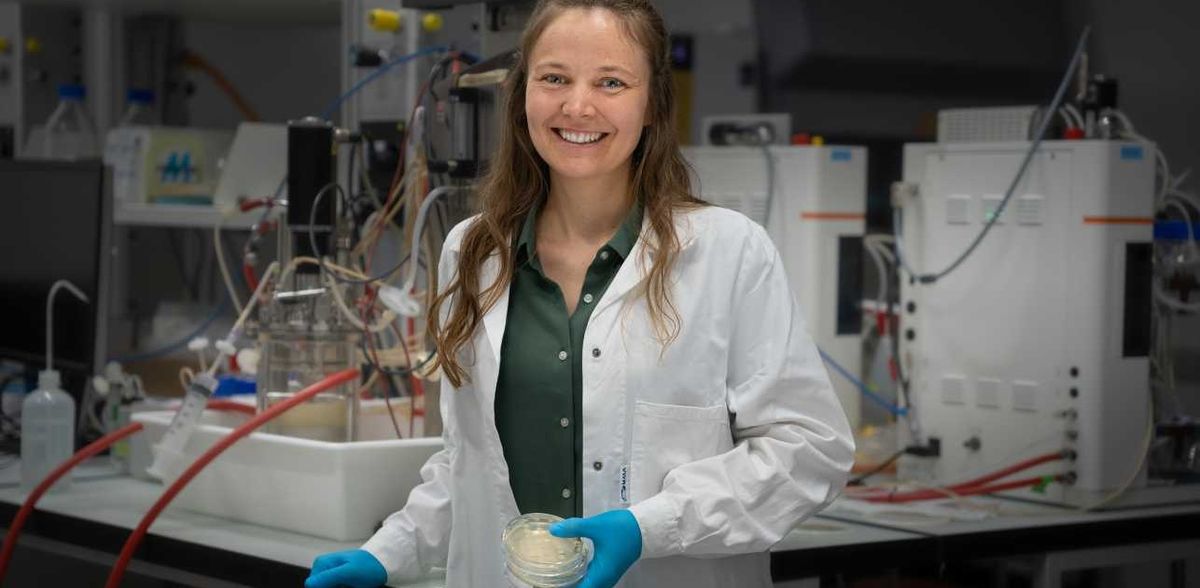
The chemical industry is involved in virtually every product we use in daily life. However, it is also responsible for a significant share of global CO₂ emissions. ETH researcher Ronja Rappold wants to change that. As an ETH Pioneer Fellow, she is developing microorganisms that convert CO₂ into useful chemicals as part of her planned ETH spin-off Teno Bioworks.
Whether medicines, clothing or food: around 96 percent of the products we use on a daily basis depend on the chemical industry. At the same time, the sector is responsible for around six percent of the global greenhouse gas emissions that are driving climate change. “The problem is huge, but often invisible,” says Rappold. This is precisely where her Teno Bioworks project comes in. “We consume the end products, but we don’t see the fossil-based raw materials used to manufacture them.”
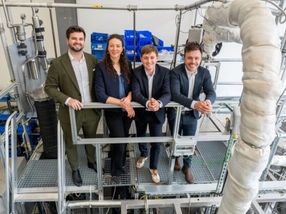
Together with her colleagues Philipp Keller and Michael Reiter, the biotechnologist is developing a technology that tackles the problem at its source: rather than treating CO₂ as a waste product, they view it as a resource. The team combines cutting-edge biology with a process as old as bread-making: namely bacterial fermentation.

The strategic route using methanol
Using CO₂ as a raw material in chemical production is a major challenge: as a gas, CO₂ is volatile and therefore difficult to control. This is where the team’s key technological innovation comes in: “green methanol” as an intermediate step. First, the gaseous CO₂ is converted into liquid methanol. This then serves as the bacteria’s starting material – effectively their “feedstock”. “Methanol is an excellent industrial raw material,” explains Rappold. “Unlike CO₂, it is not only a liquid but can also be easily stored, transported and precisely dosed”, says Rappold.
A breakthrough following decades of research
The vision of using methanol through microbial processes has been around for quite some time. Since the 1970s, researchers have been trying – with limited success – to harness naturally occurring “methanol-utilising” microorganisms in industrial applications. After years of research in the laboratory run by Julia Vorholt, Professor of Microbiology at ETH Zurich, Rappold’s team has now developed a revolutionary solution by turning the conventional approach on its head: they optimised a bacterium already used on a large industrial scale to feed on methanol instead of sugar.
“We fundamentally reprogrammed the bacterium’s metabolism”, says Rappold. The result is a bacterial factory capable of utilising methanol and enabling climate-neutral resource use in industrial chemistry.
From laboratory to market
The potential is enormous: Teno Bioworks is not developing a single solution but a platform technology. Depending on how the microorganisms are programmed, they can produce a range of products, including building blocks for cosmetics, insulation materials and sustainable plastics. As Chief Operating Officer, Rappold is responsible for steering the strategic direction of the planned ETH spin-off. In close collaboration with industry partners and potential customers worldwide, she is assessing where the technology could have the greatest impact. “The chemical industry is under enormous price pressure. For this reason, our solutions must be economically competitive,” she emphasises. Sustainability should not be a luxury but the new standard. “Our technology kills two birds with one stone,” she says. “We make chemical production independent of fossil raw materials while protecting biodiversity as well as land and water resources.”
Bridging the gap between laboratory and industry
This broader perspective has evolved over many years. It was shaped by early impressions, including the colossal bucket-wheel excavators in the Rhineland when she was a child and the vast oil fields in Texas during her student years. “The scale of habitat destruction shocked me,” she recalls. With Teno Bioworks, she aims to show that industrial production and environmental protection need not be mutually exclusive.
The future ETH spin-off remains at an early stage. The process is currently being tested in the laboratory, and initial scaling steps have been successfully implemented. The next milestone is scaling up to a pilot facility and, ultimately, to an industrial plant. This development will take several years. For Ronja Rappold, the path is clear: “We now have the means to decouple industrial production from environmental impact and fossil imports. The next step is to apply them.”


Other news from the department business & finance











Most read news






More news from our other portals



















Something is happening in the chemical industry ...
This is what true pioneering spirit looks like: Plenty of innovative start-ups are bringing fresh ideas, lifeblood and entrepreneurial spirit to change tomorrow's world for the better. Immerse yourself in the world of these young companies and take the opportunity to get in touch with the founders.