Westphalia Shifts Growth to Europe
Hydrogen: France Shows How It Can Be Done
Advertisement


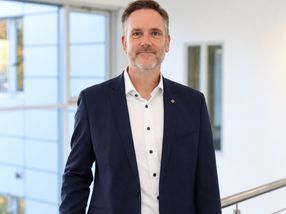
While many industrial companies are scaling back their investments in light of a weak economy, high Energy costs, and geopolitical uncertainties, the Westfalen Group is significantly increasing its investments. In fiscal year 2025, they rose by about 30 percent to more than 90 million euros. However, a growing portion of these funds is being directed toward new production and logistics sites outside Germany. “For us, Europe is the answer to the weakening economic situation in our core market, Germany,” said CEO Dr. Thomas Perkmann during the presentation of the financial results. “We are broadening our base and thereby securing our competitiveness.”
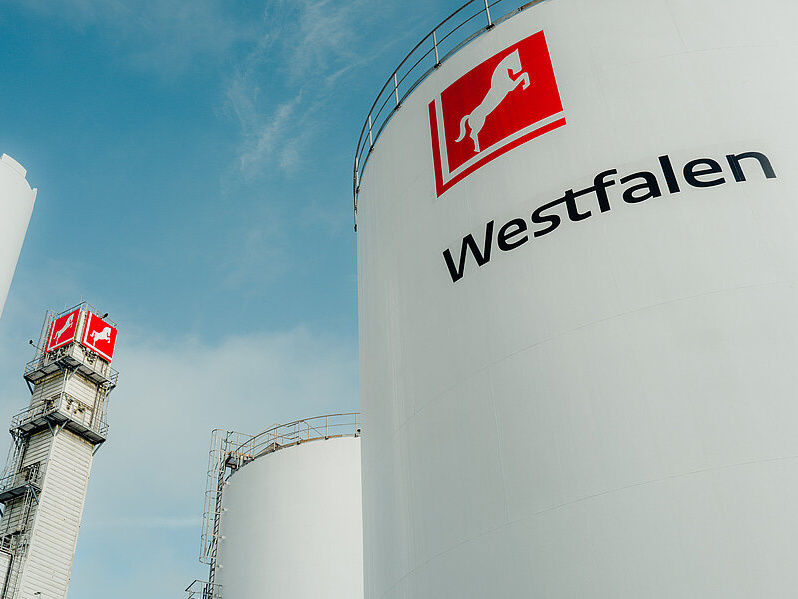
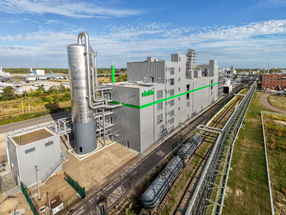
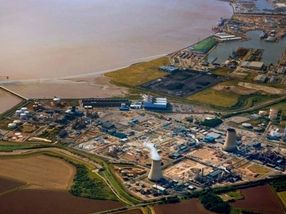
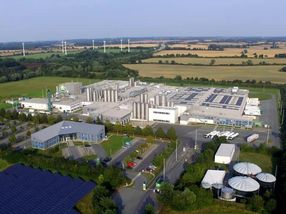
In Hörstel, Westfalen operates one of three air separation plants where oxygen, nitrogen, and argon are extracted from the ambient air.
Westfalen AG & Co. KG
Europe Becomes a Focus for Investment
For Perkmann, the cause of this trend lies not in a lack of innovation, but in the business environment: high energy costs, regulatory complexity, and a lack of reliability. “The energy transition—which is so crucial for Germany as an industrial location—is currently failing not because of a lack of technology, but due to a lack of predictability, bureaucracy, and, in particular, excessively expensive electricity.” Perkmann is therefore calling for competitive energy costs and a more reliable political framework. Only then can investments in climate-friendly technologies in Germany regain momentum.
The company’s strategic response to the ongoing economic slump is a consistent push toward internationalization. New production and logistics sites are being established in France, Austria, and Switzerland to expand production capacity in the core business of industrial gases. The goal is to increase supply security, tap into new markets, and reduce dependence on the German market.
Hydrogen: France Shows How It Can Be Done
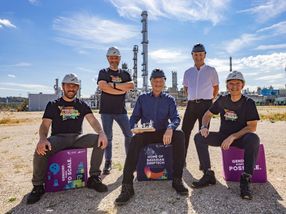
The impact of local conditions is particularly evident in hydrogen projects. While an electrolyzer is already in test operation in Florange, France, and further projects are in the works, Westfalen currently considers comparable projects in Germany unfeasible due to high electricity prices. “Our experience with the planned electrolyzer in Weißenhorn near Ulm has clearly shown us that we are currently not making progress with such projects in Germany. It was a hard lesson, but one from which we have learned,” said Perkmann.
The company is also seeing increasing caution in the heating market. In recent years, Westfalen has strategically acquired providers of heat pumps and smart energy management systems and consolidated them under Westfalen Energietechnik. However, the protracted debate over the Building Modernization Act has significantly slowed market development and investment decisions—both on the part of companies and customers.
Transformation Continues—Revenue and EBIT Remain at High Levels
Despite the challenging market conditions, Westfalen remains committed to its decarbonization strategy. The financial results provide a solid economic foundation for this: with revenue of 2.2 billion euros and EBIT (operating profit) of 95 million euros, the company has once again proven its resilience in a challenging market environment,
“We see that the issue of sustainability is taking a back seat in the face of short-term economic challenges. However, our commitment remains: economic and environmental considerations must be addressed together.” Since 2019, the company has reduced its own CO₂ emissions by 72 percent (Scope 1 and 2). Westfalen aims to achieve net-zero emissions for its own operations by 2030.CO₂ emissions from the energy sources it sells were reduced by 16 percent over the same period (Scope 3). Already, half of the company’s earnings are generated in decarbonized product segments (outside the fossil fuel sector).
For 2026, the company anticipates a significant increase in revenue and a slight rise in profit.
Note: This article has been translated using a computer system without human intervention. LUMITOS offers these automatic translations to present a wider range of current news. Since this article has been translated with automatic translation, it is possible that it contains errors in vocabulary, syntax or grammar. The original article in German can be found here.


Other news from the department business & finance