PFAS detection in minutes rather than weeks: deep-tech start-up Grapheal secures €2.5 million in EU funding
The new EU Drinking Water Directive is driving demand for mobile PFAS analysis
Advertisement


Grapheal, a deep-tech startup developing specialized biosensors, announces the award of a €2.5 million ($2.9M) grant in the latest round of the European Innovation Council (EIC) Accelerator program. This grant will support the development of PFAST, Grapheal’s fast, field-deployable graphene sensors for ultra-trace, real-time detection of per- and polyfluoroalkyl substances (PFAS), known as ‘forever chemicals’, in water.
PFAS are a class of around 12,000 chemicals which, due to their unique properties, are used in a huge number of applications and devices. A major mapping project showed that they can be found at thousands of sites throughout Europe. As a result of their extraordinary persistence, toxicity and (bio)accumulation, PFAS are a leading cause of severe adverse health effects, ecosystem disruption and escalating burdens on public health systems.
In 2026, the EU Drinking Water Directive tightened PFAS limits and pushes for higher-frequency sampling. However, the industry’s gold standard (LC-MS/MS) requires laboratory testing and returns results in weeks, which is too slow for regulatory compliance, thereby failing to meet the operational requirements of Water Treatment Plants (WTP).
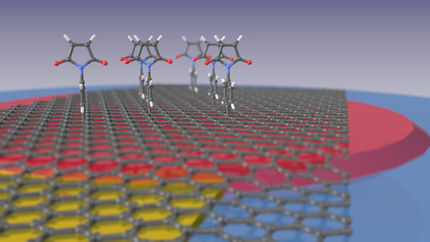
Grapheal’s portable water monitoring device is the company’s deep-tech answer to this challenge, bringing PFAS analysis to the point of need. PFAST is a full-stack graphene sensing platform containing a miniature electronic sensor, the size of a credit card, that turns lab-bound PFAS testing into on-site decisions in minutes. PFAST not only allows WTP operators to meet regulations, it also reduces their operating expenditure by enabling continuous water filter monitoring.
"Regulatory pressure is accelerating adoption of portable rapid detection sensors for PFAS and we have already received strong interest for this technology from Europe’s largest water utilities. This EIC award, widely recognized as a mark of excellence, will allow us to refine PFAST and further improve its capabilities," said Vincent Bouchiat, CEO of Grapheal. “We are now looking for partners to support the industrialization of this solution and expand manufacturing capabilities ahead of our anticipated market launch in 2027.”
The PFAS testing market is projected to reach $969.5M by 2030, from $487.1M in 2025, at a CAGR of 14.5% from 2025 to 2030. The global PFAS testing products market is witnessing rapid expansion driven by growing regulatory enforcement, environmental remediation projects and heightened awareness of PFAS contamination.
Grapheal’s technology is the result of a decade of pioneering graphene research and is protected by eight patent families and 50+ patents covering materials, device architecture and electronics. PFAST leverages the unique properties of graphene, such as an atom-thin transduction layer, high carrier mobility and dense surface functionalization, to achieve rapid, stable signals in complex water matrices. As a result, PFAST has 10x higher sensitivity than existing field-deployable PFAS solutions. Graphene is also sustainable because its synthesis and integration emit only 20% of the carbon footprint of its silicon counterparts, and does not rely on critical materials.
The European Innovation Council (EIC) is the European Union’s flagship innovation program, designed to identify, develop and scale-up breakthrough technologies and game-changing innovations. Established under the EU Horizon Europe program with a budget of over €10 billion (2021–2027), EIC supports researchers and startups that enhance green and digital transition.


Other news from the department business & finance











These products might interest you

Most read news





More news from our other portals

















Something is happening in the chemical industry ...
This is what true pioneering spirit looks like: Plenty of innovative start-ups are bringing fresh ideas, lifeblood and entrepreneurial spirit to change tomorrow's world for the better. Immerse yourself in the world of these young companies and take the opportunity to get in touch with the founders.
See the theme worlds for related content
Topic world Sensor technology
Sensor technology has revolutionized the chemical industry by providing accurate, timely and reliable data across a wide range of processes. From monitoring critical parameters in production lines to early detection of potential malfunctions or hazards, sensors are the silent sentinels that ensure quality, efficiency and safety.
Topic world Sensor technology
Sensor technology has revolutionized the chemical industry by providing accurate, timely and reliable data across a wide range of processes. From monitoring critical parameters in production lines to early detection of potential malfunctions or hazards, sensors are the silent sentinels that ensure quality, efficiency and safety.