Beyond the paddle-wheel mechanism
Elucidating the microscopic lithium ion transport in solid-state electrolytes for next-generation batteries
Advertisement


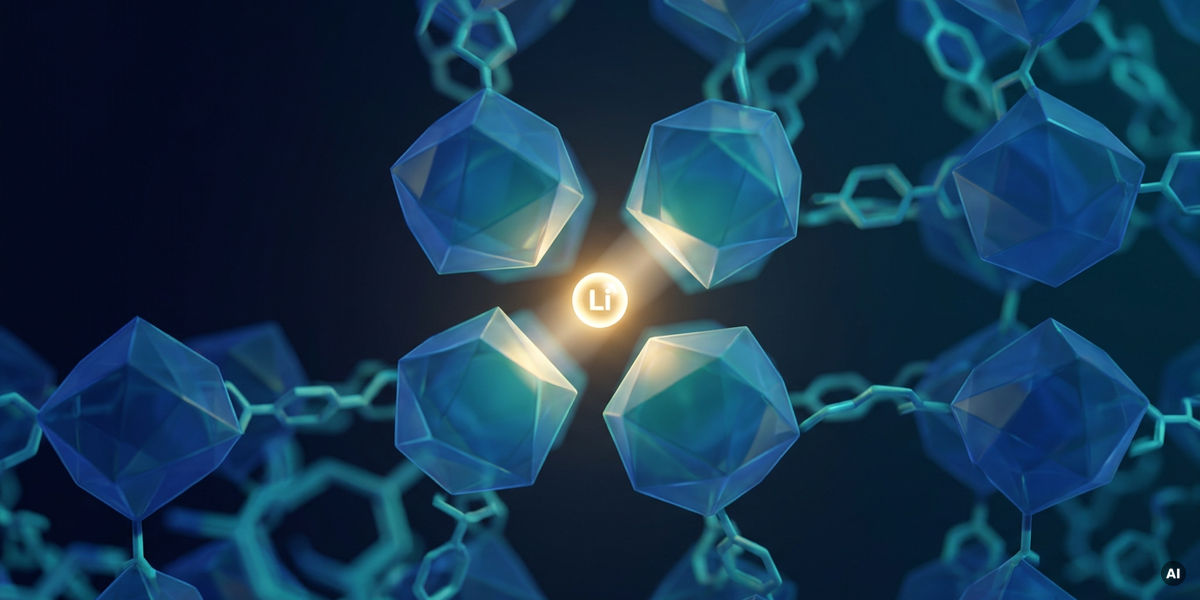
An international collaborative research group led by Professor Bong June Sung of the Department of Chemistry at Sogang University and Professor Shinji Saito of the Institute for Molecular Science (IMS), National Institutes of Natural Sciences (NINS), and the Graduate University for Advanced Studies, SOKENDAI has elucidated, at the molecular level, how lithium ions move within organic ionic plastic crystals (OIPCs) - which are attracting attention as solid electrolytes for next-generation batteries.
In OIPCs, although the material is solid, molecules and ions within the crystal rotate actively in situ; consequently, the "paddlewheel mechanism" - in which this rotational motion pushes lithium ions forward - has long been considered the primary mechanism of ion conduction. In this study, the researchers theoretically re-examined this hypothesis using molecular dynamics simulations on a supercomputer and hop-function analysis, which precisely extracts individual ion jumps. The results revealed that the movement of lithium ions is not directly driven by the surrounding rotational motion, but rather occurs through the cooperative rearrangement of an ion cage formed by the surrounding anions. In particular, we theoretically demonstrated that when the number of anions surrounding a lithium ion temporarily decreases - causing the cage to "open" - the movement of the lithium ion increases significantly.
Many lithium-ion batteries, which are widely used in smartphones and electric vehicles, employ liquid electrolytes. However, liquid electrolytes are flammable, and the risk of fire or explosion remains a major concern. To address this issue, research is underway to develop highly safe solid electrolytes as a promising solution.
Among these, organic ionic plastic crystals (OIPCs) are attracting attention as "soft solids"--materials that, despite being solid, allow their internal molecules and ions to rotate actively in situ. Such molecular motion has the potential to facilitate ion migration within the solid, and OIPCs are expected to serve as materials that combine safety with high ionic conductivity.
In lithium-ion batteries, charging and discharging occur as lithium ions move through the electrolyte inside the battery. Therefore, in the development of solid electrolytes--including OIPCs--understanding how and how quickly lithium ions can move within the electrolyte is crucial for designing high-performance, safe next-generation battery materials.
Ion conduction in OIPC has primarily been explained by the "paddlewheel mechanism." In this mechanism, the rotational motion of surrounding large molecules and ions is thought to act like the blades of a waterwheel, pushing lithium ions to their next position. However, it was not fully understood when, where, and how individual lithium ions actually move.
Original publication



Other news from the department science














These products might interest you


Most read news











More news from our other portals























See the theme worlds for related content
Topic World Battery Technology
The topic world Battery Technology combines relevant knowledge in a unique way. Here you will find everything about suppliers and their products, webinars, white papers, catalogs and brochures.

Topic World Battery Technology
The topic world Battery Technology combines relevant knowledge in a unique way. Here you will find everything about suppliers and their products, webinars, white papers, catalogs and brochures.