AI Prepares Plastic Waste for Use as Industrial-Grade Recycled Materials
Advertisement


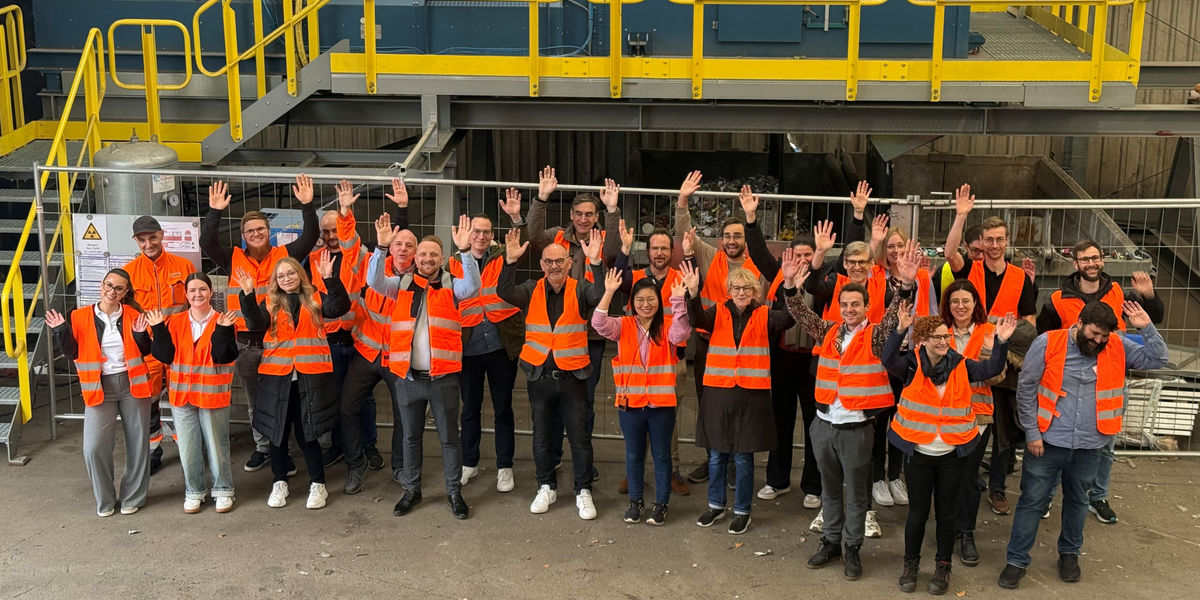
In the “K3I-Cycling” project, the Fraunhofer Institute for Structural Durability and System Reliability LBF, together with 16 partners, is developing AI-supported methods for sorting post-consumer plastics, such as those from the yellow bag. The researchers from Darmstadt are leading the “Recycling and Recyclate Production” work package and are developing a toolbox for evaluating and post-stabilizing recyclates. Packaging manufacturers, recyclers, brand manufacturers, and municipalities benefit from reliable performance metrics. The project is funded by the Federal Ministry of Research, Technology, and Space (BMFTR).
Mixed lightweight packaging waste (LVP) is a challenging source of raw materials. Its composition varies. Contaminants and aging affect the quality of the recycled materials derived from it. This is precisely where the “K3I-Cycling” project comes in.
From Mixed Packaging Waste to Reliable Material Qualities
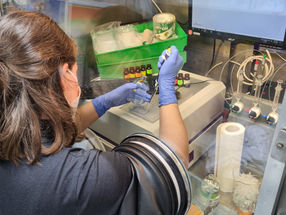
In the BMFTR-funded project, the Fraunhofer LBF contributes its expertise in the “Recycling and Recyclate Production” work package, as well as its expertise in materials evaluation, system reliability, digitalization, and circularity. The researchers are developing new methods to produce high-quality plastic recyclates from mixed lightweight packaging waste. The focus is on the practical production of recycled materials on a laboratory and pilot scale, the evaluation of material properties, and the development of additive packages. This also includes bio-based stabilizers that can be used to specifically improve the properties of the recycled materials.
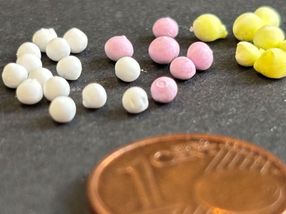
Fraunhofer LBF combines real-world materials analysis with machine learning. Polyolefin recyclates are classified according to their degree of aging and impurities and grouped into quality clusters. This results in robust material quality levels. These can be incorporated into new standards and digital product passports. In this way, the researchers make technical complexity manageable and help to reliably ensure recyclability.
Characteristic values provide reliability for demanding applications
The research provides comprehensive and reliable performance metrics for high-quality plastic recyclates used in demanding products. This is important for packaging manufacturers, recyclers, and brand owners. They can evaluate recycled materials more precisely and use them in applications that place high demands on material quality and reliability. This also includes packaging intended for food contact.
To meet these requirements, the Artificial Neural Twin (ANT) was developed as part of the project. It maps the entire sorting chain from collection to the end user of the recycled material and enables the targeted optimization of individual parameters (e.g., purity, short logistics, low price) across the entire value chain. AI is also used to protect sorting facilities: DangerSort can reliably detect and eject lithium batteries before they cause fires. Industry and municipalities benefit from more reliable decision-making and fail-safe facilities. They can meet recycling targets cost-effectively, measurably reduce CO₂ emissions, and secure the supply of secondary raw materials. This strengthens a resilient European circular economy and combines virtual development with real-world validation.
Note: This article has been translated using a computer system without human intervention. LUMITOS offers these automatic translations to present a wider range of current news. Since this article has been translated with automatic translation, it is possible that it contains errors in vocabulary, syntax or grammar. The original article in German can be found here.



Other news from the department research and development