Dimmer Outlook for Germany as a Research Hub
“The chemical and pharmaceutical industry wants to innovate its way out of the crisis. The problem is not the will, but Germany as a business location.”
Advertisement


Innovation remains the key to overcoming the crisis for the chemical and pharmaceutical industry. Companies continue to be highly willing to invest in research and development (R&D) and are committed to a strong research focus: In 2025, the industry’s R&D budgets totaled just under 16 billion euros. Three-quarters of companies are developing new products and processes. They reinvest about 7 percent of their revenue in R&D. These figures come from data published by the German chemical industry Association (VCI).
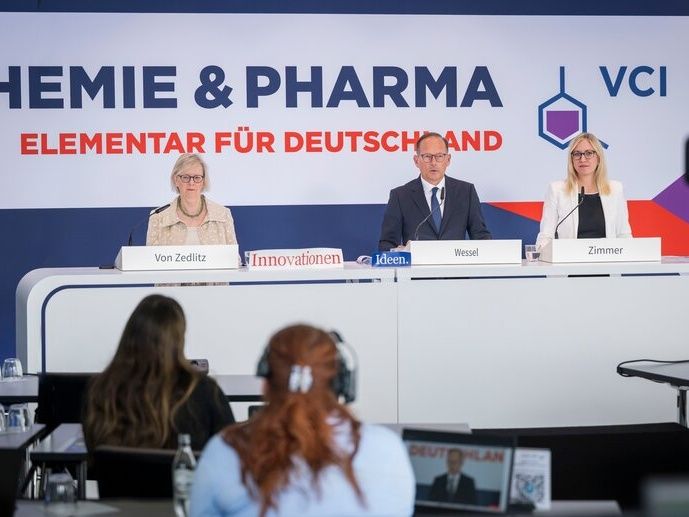
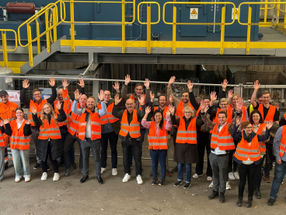
Research and innovation remain key factors in the success of the chemical and pharmaceutical industry.
© VCI / Thomas Lohnes
For the current year, however, the outlook is clouding over: According to the VCI, 29 percent of chemical and pharmaceutical companies expect R&D spending in Germany to decline. Only slightly more than one in five companies plans to increase its budget at its domestic locations. In contrast, plans for overseas operations are significantly more positive: Here, 41 percent of the companies surveyed forecast rising budgets.
Thomas Wessel, Chair of the VCI Committee on Research, Science, and Education, makes it clear: “The chemical and pharmaceutical industry wants to innovate its way out of the crisis. The problem is not the will, but Germany as a business location.”

While companies continue on their path of innovation, Germany as a business location is coming under increasing pressure. Many countries are catching up rapidly. This is evident, for example, in their growing R&D budgets. By contrast, the German chemical and pharmaceutical industry’s share of global R&D spending is expected to decline from 6.5 percent (2010) to 4.2 percent (2025).
In addition, according to the VCI, other countries have long since come to view research, development, production, and the business location as a single entity. As a result, global competition is not only becoming fiercer but is also taking on a more strategic character, the association explains, describing the trend in the international race to secure the best conditions for research, development, and production at various locations.
China, in particular, is pursuing a crystal-clear, industry-oriented innovation strategy. This success is impressively reflected in the figures: China’s share of global patent applications in the chemical and pharmaceutical sectors nearly quadrupled between 2010 and 2024. This puts China in second place behind the U.S.—ahead of Japan, South Korea, and Germany. “The transition from research to market readiness is ensured through multiple channels. The entire process is supported by a proactive agenda for the protection of intellectual property,” says Wessel, explaining China’s trend.
A Hub for Innovation Needs a Major Push
The VCI therefore calls for strategic thinking to be integrated into political thinking and action, and for the pace to be significantly accelerated in order to commercialize research ideas and increase Germany’s competitiveness. “Competition knows no respite,” Wessel emphasizes, adding: “All efforts by companies must be met with politically sustainable framework conditions. This isn’t about making minor adjustments here and there, but about setting a clear course for Germany as a hub of innovation and demonstrating the will to implement fundamental reforms. It’s about making a bold move. Germany must have the courage and the will to be a country that enables, accelerates, and welcomes innovation.”
Wessel describes the federal government’s reform package as a first step. However, he urges that contradictory policies—such as the healthcare austerity package, which severely weakens Germany’s position as a pharmaceutical hub—be corrected. In addition, the Chemical and High-Tech Agenda, the National Biotechnology Platform, and the future pharmaceutical and medical technology strategy must be coordinated and integrated into a coherent innovation strategy. To this end, the Chemistry Agenda 2045 must set the guidelines for industrial policy so that the potential of the chemical, pharmaceutical, and biotechnology sectors can be translated into competitive value creation and production. “We need cross-ministerial coordination, reliable funding, integration into social and economic reforms, and predictable policy,” Wessel emphasizes.
Note: This article has been translated using a computer system without human intervention. LUMITOS offers these automatic translations to present a wider range of current news. Since this article has been translated with automatic translation, it is possible that it contains errors in vocabulary, syntax or grammar. The original article in German can be found here.



Other news from the department research and development