Energy conversion and energy storage for a climate-neutral industry
Fraunhofer Institutes and SGC Energy agree to collaborate on CO2 electrolysis, hydrogen and batteries
Advertisement


Advancing technologies for a climate-neutral industry together: The Fraunhofer Institute for Environmental, Safety and Energy Technology UMSICHT, the Fraunhofer Institute for Applied Polymer Research IAP and the South Korean energy company SGC Energy are pooling their expertise to further develop processes for CO2 utilization and hydrogen production, as well as battery and fuel cell technologies. The partners have signed a Memorandum of Understanding to this end.
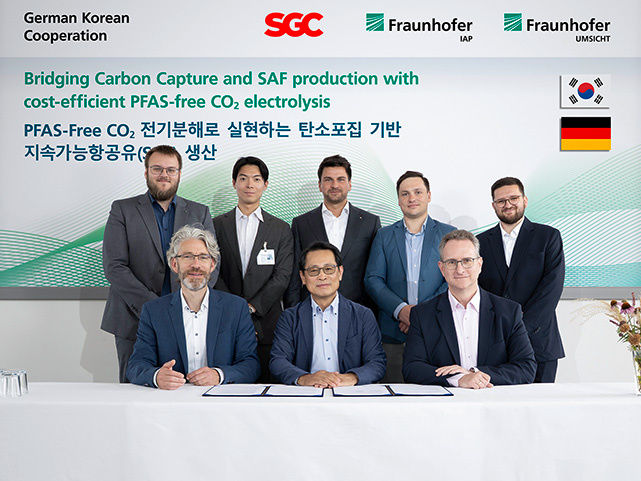
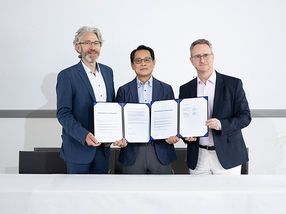
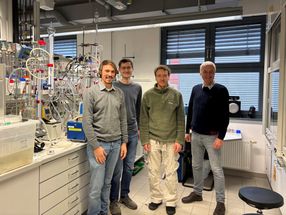
The teams from Fraunhofer UMSICHT, Fraunhofer IAP and SGC Energy at the signing of the Memorandum of Understanding.
© Fraunhofer UMSICHT
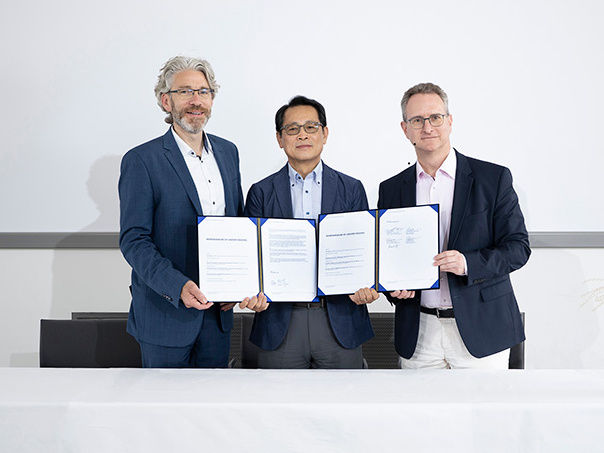
Agreed to future collaboration on CO2 electrolysis, hydrogen, and batteries (from left): Prof. Dr.-Ing. Christian Doetsch (Fraunhofer UMSICHT), Ken Yoon (SGC Energy) and Prof. Dr. Alexander Böker (Fraunhofer IAP).
© Fraunhofer UMSICHT
The collaboration focuses on the development and scaling of electrochemical technologies for industrial application. As one of the leading players in South Korea’s energy sector and in the field of carbon capture, SGC Energy is taking on a central role as an industry partner and future user of the technologies being developed. The company aims to utilize existing CO2 capture facilities and industrial infrastructure to establish an electrolysis platform for the production of sustainable fuels and basic chemicals. With its carbon capture infrastructure, extensive experience in energy supply, and strong engineering expertise, SGC Energy creates the key conditions for evaluating new technologies at an early stage in terms of their technical feasibility and economic potential and for further developing them for industrial use.
Fraunhofer UMSICHT contributes its many years of experience in the development of CO2 electrolysers, stack concepts, and the integration of electrochemical processes into industrial plants. Fraunhofer IAP contributes its expertise in the development of high-performance polymeric energy materials and their scaling up to an industry-relevant level. Together, the partners aim to accelerate technology transfer into industrial value chains.
“With SGC Energy, we have gained a partner that brings both the necessary engineering expertise and the infrastructure for CO2 capture to move CO2 electrolysis from the pilot scale to industrial application,” emphasizes Prof. Dr.-Ing. Christian Doetsch, institute director of Fraunhofer UMSICHT. “The transformation of industrial energy systems will only succeed if new materials, electrochemical processes, and scalable plant concepts work together seamlessly. In this collaboration, we are combining our process and systems expertise with materials science research and industrial requirements.”
CO2 as a raw material for industry
One focus of the collaboration is CO2 electrolysis. In this process, captured carbon dioxide is converted into chemical feedstocks or precursors for synthetic fuels using renewable electrical energy. This approach is considered a particularly promising technology for the production of Sustainable Aviation Fuels (SAF).
The partners aim to utilize SGC Energy’s existing CO2 capture infrastructure to further develop and scale up electrochemical technologies for the production of sustainable fuels and chemical feedstocks. This is intended to create the essential conditions for advancing the conversion of captured CO2 into industrially relevant products from the pilot scale to commercial application.
Material development for high-performance electrolysers and batteries
High-performance materials are crucial for the economic deployment of electrochemical systems. In this area, Fraunhofer IAP contributes its expertise in the development of polymeric energy materials. These include PFAS-free high-performance membranes for electrolysers, as well as polymeric solid electrolytes and binders for batteries.
The membranes perform key functions in electrochemical processes and influence the efficiency, selectivity, and service life of the systems. The goal is to further develop materials specifically tailored to the requirements of future CO2 electrolysis, hydrogen, and battery systems. “With this collaboration, we are creating a framework in which material development, system integration, and practical application are considered together from the very beginning. For a climate-neutral industry, we need high-performance materials, robust components, and partners who consistently drive research toward practical application,” said Prof. Dr. Alexander Böker, institute director of the Fraunhofer IAP.
Bringing research and industrial implementation together
The combination of Fraunhofer UMSICHT’s expertise in electrolysers, Fraunhofer IAP’s know-how in materials and membrane development, and SGC Energy’s industrial capabilities creates a direct path from research to large-scale application. The partners are convinced that the conversion of captured CO2 into fuels and chemical products can make an important contribution to a climate-neutral industry in the future.
“For us, this partnership is an important strategic step toward actively shaping future technologies for a climate-neutral industry,” said Ken Yoon, Chief Strategy Officer at SGC Energy. “By combining SGC Energy's expertise in energy systems and process integration with Fraunhofer's strength in electrochemical CO2 conversion and scale-up, we can move beyond isolated research and toward integrated technology demonstrations that reflect real industrial conditions. Korea and Germany share the conviction that decarbonizing the chemical sector requires not only new catalysts and cell designs, but also credible engineering pathways from the laboratory to the pilot scale. This collaboration gives us the framework to pursue that together, with shared milestones and clear lines of responsibility on both sides. We see this as the beginning of a longer-term technology alliance, one that positions both partners to compete in the emerging global market for sustainable carbon-based products.“
The signing of the Memorandum of Understanding lays the foundation for joint research and development projects across the entire value chain – from material development and electrochemical systems to industrial implementation. In the coming months, specific projects in the areas of CO2 utilization, hydrogen technologies, and battery and fuel cell systems will be defined.


Other news from the department research and development





Most read news






More news from our other portals













See the theme worlds for related content
Topic World Battery Technology
The topic world Battery Technology combines relevant knowledge in a unique way. Here you will find everything about suppliers and their products, webinars, white papers, catalogs and brochures.

Topic World Battery Technology
The topic world Battery Technology combines relevant knowledge in a unique way. Here you will find everything about suppliers and their products, webinars, white papers, catalogs and brochures.