Recycling in Agriculture: Biogenic CO₂ Is Turned Into Renewable Fuel
Five partners from the research and industrial sectors are developing a decentralized synthesis plant
Advertisement


What currently escapes from a biogas plant and is released into the atmosphere—separated and emitted biogenic CO₂—can in the future be converted into Methanol using hydrogen produced from water via electrolysis powered by renewable electricity. Methanol is a renewable fuel that can be easily stored and can also be used directly in agriculture as fuel for farm machinery.
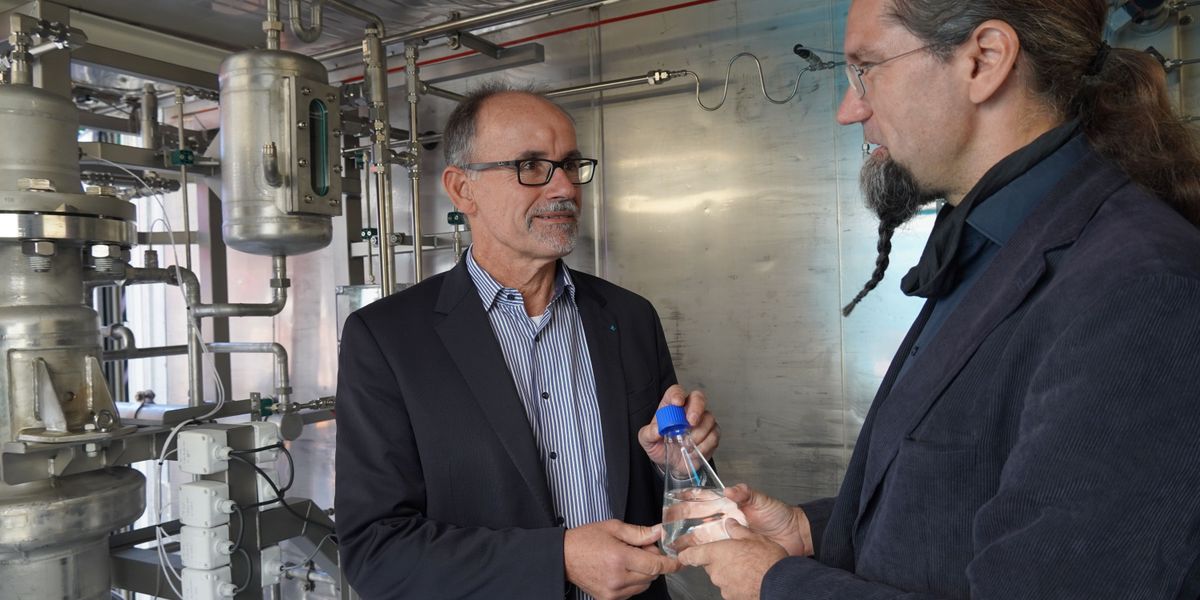
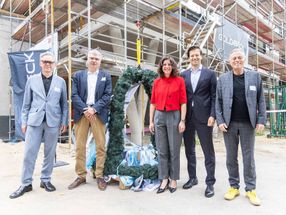
On September 10, 2026, a container-based facility for the synthesis of green methanol was inaugurated at Stralsund University of Applied Sciences in the presence of Dr. Wolfgang Blank, Minister of Economic Affairs for the state of Mecklenburg-Western Pomerania. It is the result of the joint project “Decentralized Methanol Synthesis” involving the partners Leibniz Institute for Plasma Science and Technology e. V., TAB Maschinen- und Stahlbau GmbH Barth, Stralsund University of Applied Sciences, the Leibniz Institute for Catalysis e.V., and the Fraunhofer Institute for Ceramic Technologies and Systems.
The project is one of the subprojects of the WIR!2 alliance biogeniV for the utilization of biogenic residues. “Mecklenburg-Western Pomerania offers ideal conditions for generating electricity from renewable energy sources and processing it—along with biogenic waste materials—into innovative products for our economy,” said Dr. Wolfgang Blank. “The methanol synthesis plant is a prime example of this—and it’s ‘made in MV.’ “This project brings together science, industry, and regional resources—and it is precisely these kinds of collaborative projects that we need to ensure sustainable value creation and new jobs in the state, thereby capitalizing on the opportunities presented by the energy transition,” the minister continued.
The project partners designed the plant over the course of three years of collaborative work. It is designed for decentralized operation and is thus suited for the typical applications of on-farm biogas plants. In the plant, CO₂ and hydrogen are converted—via catalysis at approximately 240 degrees Celsius and an elevated pressure of 40 bar—into a methanol-water mixture, from which the water is subsequently separated. The pressure conditions within the system are specifically controlled to ensure that the thermal processes proceed stably. “The process demonstrates that we can store green—that is, renewable—hydrogen in a liquid form—with the option of potentially transporting it worldwide,” explains Prof. Dr. Johannes Gulden from the Institute for Renewable Energy Systems at Stralsund University of Applied Sciences.
The further expansion of the facility is the focus of a sister project that has just been launched. In addition to scaling up the process, the project aims to further develop the entire process chain: Plans include the processing of biogas and the separation of the CO₂ it contains using membrane technology, a plasma stage for optimizing the methanol synthesis process, an electrolysis plant for local hydrogen production, and the subsequent concentration of the methanol. The goal is to deploy the technology directly at a biogas plant and make the produced methanol available for agricultural use. This demonstration plant is expected to achieve a production capacity of up to 36 liters of methanol per day.
Launched in 2022 as “Biogenic Waste Utilization for the Green Transformation,” the biogeniV consortium project is funded as part of the WIR! “Change Through Innovation in the Region” program of the Federal Ministry of Research, Technology, and Space, as well as regionally in eastern Mecklenburg-Western Pomerania. Across all subprojects, it involves more than 55 partners from industry, research, and local governments.
“We see green methanol from the region as a key building block for a resilient and climate-friendly future,” says Michael Galander. The mayor of the Hanseatic City of Anklam is the alliance’s spokesperson: “We have large quantities of these residual materials available in our region and can also provide the necessary green electricity from wind and solar power.”
Note: This article has been translated using a computer system without human intervention. LUMITOS offers these automatic translations to present a wider range of current news. Since this article has been translated with automatic translation, it is possible that it contains errors in vocabulary, syntax or grammar. The original article in German can be found here.


Other news from the department science












Most read news





More news from our other portals


















See the theme worlds for related content
Topic world Synthesis
Chemical synthesis is at the heart of modern chemistry and enables the targeted production of molecules with specific properties. By combining starting materials in defined reaction conditions, chemists can create a wide range of compounds, from simple molecules to complex active ingredients.
Topic world Synthesis
Chemical synthesis is at the heart of modern chemistry and enables the targeted production of molecules with specific properties. By combining starting materials in defined reaction conditions, chemists can create a wide range of compounds, from simple molecules to complex active ingredients.