A second life for solar modules
DBU supports start-up Better Sol with around 125,000 euros
Advertisement


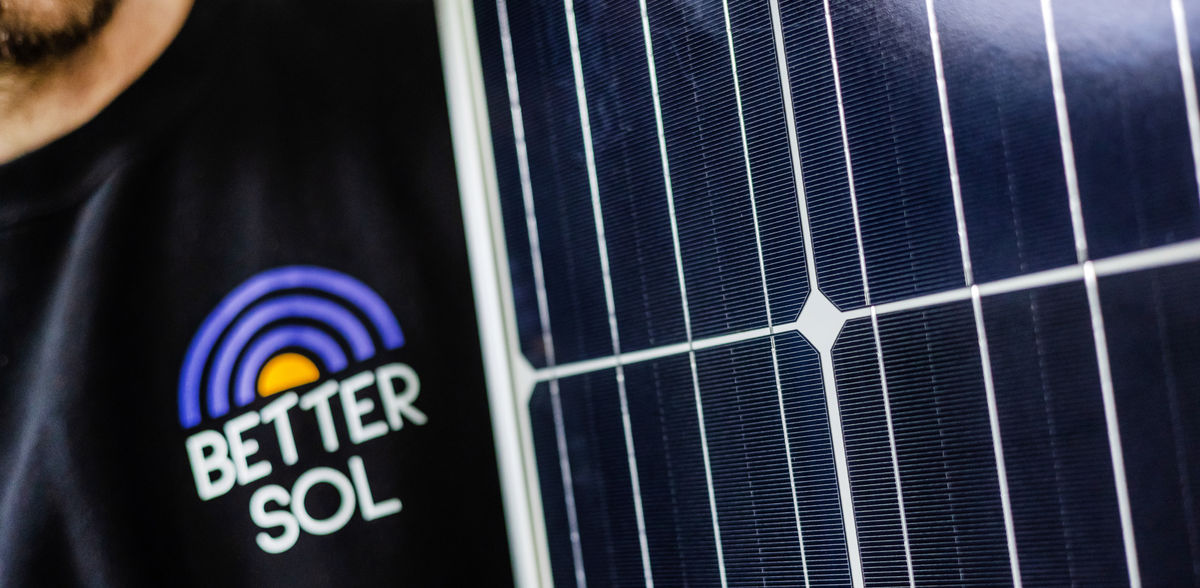
According to statistics, electricity generation from Renewable energies in Germany reached a new high of around 64% at the end of 2025. In addition to wind power, photovoltaics in particular increased. The challenge posed by this dynamic growth is the increasing number of decommissioned solar modules. To reduce the amount of waste and prevent premature disposal, the Braunschweig-based start-up Better Sol is developing a process to salvage used but still efficient solar modules. The German Federal Environmental Foundation (DBU) has funded the start-up with around 125,000 euros.
Guaranteed performance of used solar modules
According to the German Federal Statistical Office, photovoltaics now accounts for around 24 percent of electricity generation in Germany, making it the second most important energy source. DBU Secretary General Alexander Bonde sees this as "proof that the local infrastructure and economy can be made sustainable on a large scale." To ensure that efforts for more renewable energies do not come to a standstill, he says that used but still efficient materials must be "preserved for further use through clever recycling management". This is exactly where the start-up Better Sol comes in for photovoltaic energy. The team led by co-founder Luisa Schulze has used DBU funding to develop a system to determine the utilization potential of decommissioned solar modules. Schulze: "We want to bring suitable solar panels back onto the market with guaranteed performance and a transparent performance forecast."
Transparent quality features bring success on the market
The Better Sol team determines the quality of used photovoltaic systems using a partially automated test system including software developed in-house based on artificial intelligence (AI). "We first carry out a multi-stage visual inspection," explains Schulze. This examines both gross damage and each solar cell individually. According to Schulze, this is followed by a performance test. "The question is how many watts the product still delivers compared to the original output," says the Better Sol co-founder. Electrical safety is also checked in detail. Schulze: "Our software automatically combines all this data into a detailed performance forecast." Each functional module receives a label with the test data and an assigned performance class, and only then is the rest finally sorted out for recycling. "There is also a comprehensive test report for each module. We keep the quality assessment as transparent as possible so that all customers can choose the best solar panels for them," says Schulze. According to her, the used solar panels will only be accepted on the market with these easily comprehensible quality features.
Every second solar panel can be used again
According to Schulze, the majority of decommissioned solar panels come primarily from solar parks where large quantities of modules are regularly replaced. "When private operators build solar panels on their homes, the modules normally have a long service life," says Schulze. However, the situation is different for large solar parks. The Better Sol co-founder explains: "Operators often replace larger quantities of solar modules quite early in their life cycle with newer, more powerful models." The result: a higher amount of renewable energy, but also the discarding of many solar panels despite years or decades of remaining useful life. "On average, every second used solar panel is still suitable for reuse. More green electricity and less waste are therefore possible at the same time," says Schulze. Better Sol wants to prevent these valuable raw materials and still-functioning technology from ending up as waste.
Testing solar modules where they are decommissioned
In contrast to the origin of the used solar modules, their target group is much more diverse. Schulze: "High-quality, used photovoltaic systems are often of interest to private households or the roofs of larger factory buildings." Sales are made directly via the Better Sol website. The next step in development: the start-up is planning a mobile version of the test system "to test the solar modules where they are decommissioned," says Schulze. With additional automation of the test system, it should also be possible to handle larger-scale decommissioning of solar parks in the future.
Note: This article has been translated using a computer system without human intervention. LUMITOS offers these automatic translations to present a wider range of current news. Since this article has been translated with automatic translation, it is possible that it contains errors in vocabulary, syntax or grammar. The original article in German can be found here.


Other news from the department business & finance









These products might interest you


Most read news






More news from our other portals
























Something is happening in the chemical industry ...
This is what true pioneering spirit looks like: Plenty of innovative start-ups are bringing fresh ideas, lifeblood and entrepreneurial spirit to change tomorrow's world for the better. Immerse yourself in the world of these young companies and take the opportunity to get in touch with the founders.