Energy storage breakthrough solves the fast-charging problem
Custom electrodes made from organic material prevent chemical breakdown at high voltages
Advertisement


Electrochemical capacitors, often called supercapacitors, are the sprinters of the energy world. They charge instantly and deliver massive bursts of power on demand. The trade-off, however, is their lack of endurance: they cannot store much total energy, and they tend to leak their charge quickly when sitting idle. While engineers know that cranking up the operating voltage could solve the energy density problem, doing so almost always causes the internal chemical bath (the electrolyte) to break down and fail.
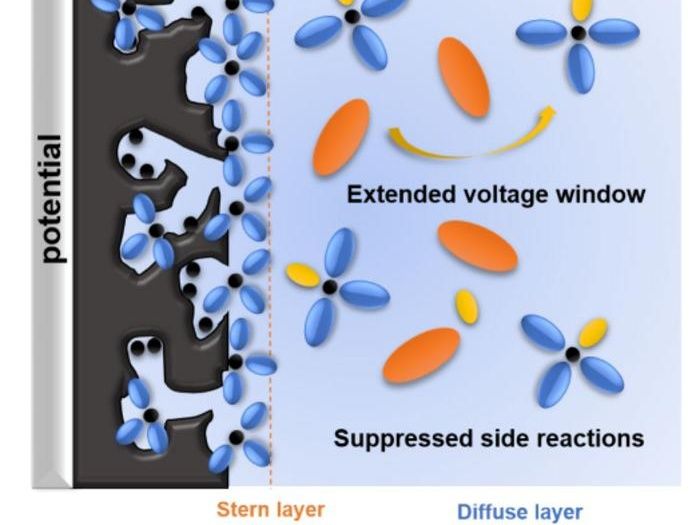
Lignin-derived hierarchical porous carbons enabling high-voltage electrochemical capacitors with low self-discharge
Shichao Zhang, Shenglin Liu, Suyang Si, Keqi Zeng, Chenxin Cai, Xiangzhou Yuan, Yawen Tang, Feng Gong & Hualin Ye
To bypass this voltage trap, a joint research effort detailed in Carbon Research introduces an ingenious "co-design" strategy. By building a custom electrode out of organic plant matter and pairing it with a highly specialized fluid, the team successfully stabilized a supercapacitor operating at a remarkable 4.0 volts.
This structural and chemical triumph is the result of a close partnership led by Dr. Feng Gong at Southeast University and Dr. Hualin Ye from Nanjing Normal University. By combining the deep resources of the Key Laboratory of Energy Thermal Conversion and Control (Ministry of Education) and the Jiangsu Key Laboratory of New Power Batteries, the researchers tackled the supercapacitor's core flaws from the inside out.
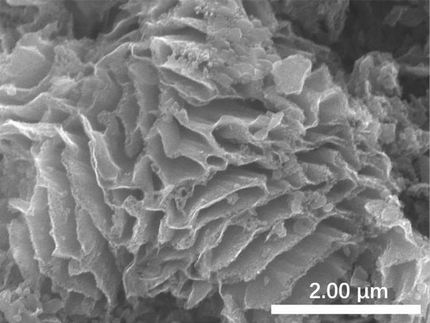
Instead of treating the solid hardware and the liquid chemicals as completely separate components, the research team engineered them to fit together like a lock and key. They began by transforming lignin, an abundant natural polymer found in plant cell walls, into a highly porous carbon electrode. These carbon structures feature incredibly tight, sub-nanometer holes.
To complement this, the scientists formulated a weakly solvating lithium-based electrolyte mixed with a specific fluorinated diluent.
The mechanism behind their success is twofold. First, the tiny pores in the lignin-derived carbon are geometrically perfectly matched to catch and hold the specific solvated lithium ions, generating massive energy storage capacity. Second, the fluorinated liquid acts as a chemical bodyguard. It actively suppresses degradation and blocks parasitic reactions, keeping the entire system stable even under the intense electrical pressure of a 4.0 V charge.
Performance Milestones Reached:
- Shattering the Ceiling: The device operates smoothly at an unprecedented 4.0 V, avoiding the rapid self-discharge that plagues standard models.
- High Energy Density: By maximizing the fit between the ions and the carbon pores, the system achieves an impressive 77.4 Wh kg⁻¹, blurring the line between fast-charging supercapacitors and traditional batteries.
- Marathon Endurance: The protective chemistry ensures exceptional durability. After enduring 10,000 rigorous charge and discharge cycles, the capacitor maintained over 90% of its original capacity.
As industries scramble to find better ways to power energy-intensive technologies, from heavy-duty electric transit to smart power grids, this breakthrough offers a highly practical blueprint. The collaborative work out of Southeast University and Nanjing Normal University proves that with the right combination of bio-based materials and clever chemistry, we no longer have to choose between quick power and long-lasting energy.
Original publication


Other news from the department science












Most read news





More news from our other portals

























See the theme worlds for related content
Topic World Battery Technology
The topic world Battery Technology combines relevant knowledge in a unique way. Here you will find everything about suppliers and their products, webinars, white papers, catalogs and brochures.

Topic World Battery Technology
The topic world Battery Technology combines relevant knowledge in a unique way. Here you will find everything about suppliers and their products, webinars, white papers, catalogs and brochures.