Protein Content in Foods — New Conversion Factors Enable More Precise Assessment
Max Rubner Institute Releases New Database for Nitrogen-to-Protein Conversion
Advertisement


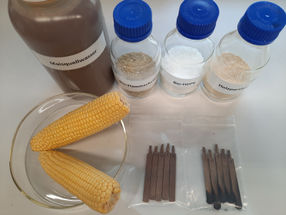
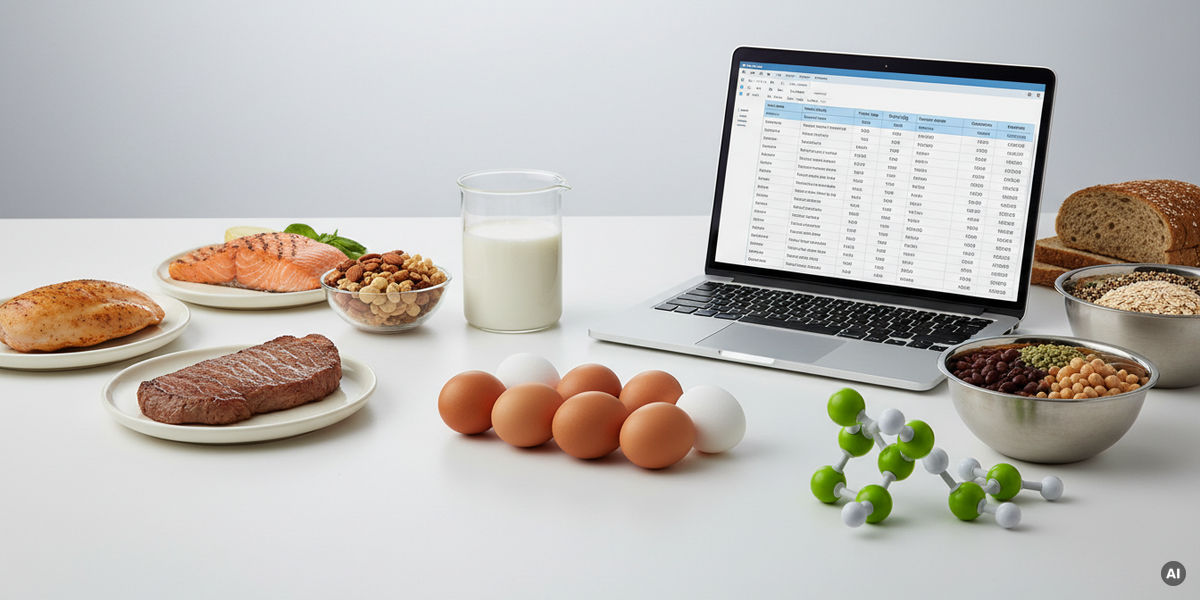
The Max Rubner Institute, in collaboration with other research institutions, has developed a new database for calculating the protein content in foods. It lists the conversion factors used to calculate the protein content of a food based on its nitrogen content. The new nitrogen-to-protein conversion factors (NCF) range from 5.0 to 5.9, which in some cases is significantly lower than the previously used factor of 6.25. Depending on the food group, this results in protein contents that are approximately 5 to 20 percent lower.
Traditionally, the protein content in foods is not measured directly but is calculated based on their nitrogen content. A flat-rate NCF of 6.25 was typically used for this purpose. This factor is based on historical assumptions regarding the nitrogen content of proteins in animal-derived substances and was introduced approximately 200 years ago. Even the more food-specific NCFs developed later date primarily from the first half of the 20th century. Despite its known inaccuracy, the NCF of 6.25 has been used worldwide in nearly all relevant areas to date—for example, in food labeling under the Food Information Regulation, in national and international nutrient databases, in dietary surveys, and in deriving recommendations for protein intake. This can lead to systematic biases in the assessment of actual protein content.
To enable more precise values, the Max Rubner Institute, in collaboration with the Network of European Nutrient Databases (EuroFIR), the Technical University of Munich, and the University of Bonn, has scientifically redefined and fundamentally revised the calculation of protein content in nutrient databases. In this context, the term “protein” was also systematically reviewed and harmonized. The new database for NCF (Nitrogen Conversion Estimates Factors Database – NiCE Factors Database) represents a more nuanced and scientifically sound alternative to previous conversion factors used to determine the protein content in foods. It was recently published in a scientific journal and is therefore publicly available.
Note: This article has been translated using a computer system without human intervention. LUMITOS offers these automatic translations to present a wider range of current news. Since this article has been translated with automatic translation, it is possible that it contains errors in vocabulary, syntax or grammar. The original article in German can be found here.
Original publication
Larissa E. Pferdmenges, Franz Schweiggert, Paolo C. Colombani, et al.; "Developing a comprehensive database of nitrogen-to-protein conversion factors: the NiCE factors database"; Food Chemistry, Volume 528
Larissa E. Pferdmenges, Paolo C. Colombani, Monica Hauger Carlsen, et al.; "Toward harmonizing protein data in food composition databases: evaluating perspectives, methods and implications"; Critical Reviews in Food Science and Nutrition, Volume 65, 2025-6-6


Other news from the department science