Hydrogen for Industrial Processes Heat
HyHeat Tests Real-World Application
Advertisement


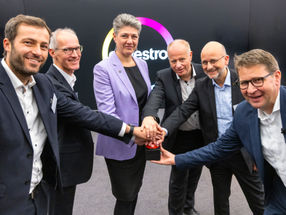
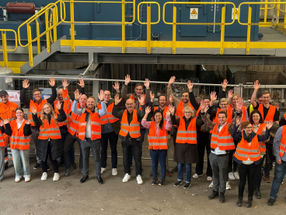
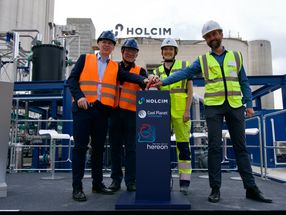
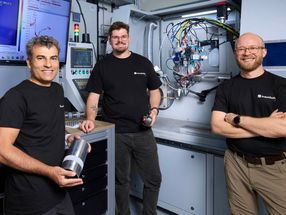
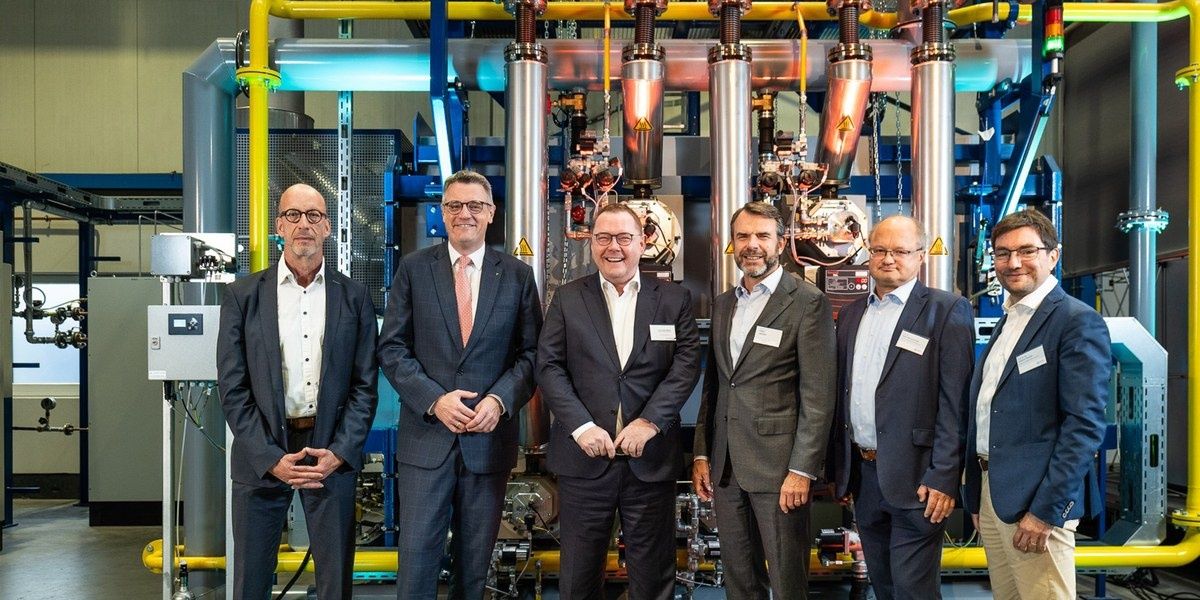
The schwartz group and Forschungszentrum Jülich unveiled a demonstration plant in Simmerath designed to test the use of hydrogen in high- temperature industrial processes. The demonstration plant was developed within the Helmholtz Hydrogen Cluster (HC-H2).
Special heat treatment processes are required to specifically alter the shape and hardness of metals These processes are central to the press hardening of car body parts, for example. Metal blanks are heated to over 900 °C in a process that requires a lot of energy. The process heat required is typically generated by burning fossil fuel gases, which produces large quantities of CO 2 emissions.
This is where HyHeat comes in: with the plant already in operation, the schwartz group and Forschungszentrum Jülich are demonstrating the technical feasibility of switching between fossil fuel gas and hydrogen in such high- temperature processes. This is a major step forward on the path to market readiness.
Reducing CO₂ emissions from process heat
The CO 2 savings potential of replacing fossil fuel gases with hydrogen is huge: a heat treatment plant for press hardening generates some 2,000 tonnes of CO₂ emissions annually. In MyHeat, the partners are showing a way of making this step in automobile production more climate-friendly.
The German Federal Ministry of Research, Technology and Space (BMFTR) is funding the project with € 1.7 million out of a total volume of € 2.44 million.
Flexibly integrating hydrogen into existing processes
Today, around 80 percent of all press-hardened automotive body parts worldwide are heated in heat treatment plants manufactured by the schwartz group. The demonstration plant developed in the HyHeat project will show how hydrogen can be flexibly integrated as a fuel gas into the existing processes.
“We are using the plant to test transitioning to hydrogen without interrupting operations. By blending in hydrogen and allowing for a seamless changeover between fuel gases, even small initial quantities of available hydrogen can be utilized,” says Philipp Morsch from the Institute for a sustainable Hydrogen Economy (IHE-4) at Forschungszentrum Jülich who is coordinating the scientific monitoring of HC-H2.
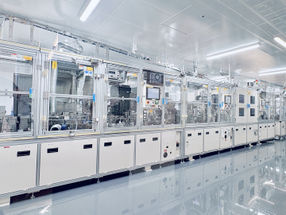
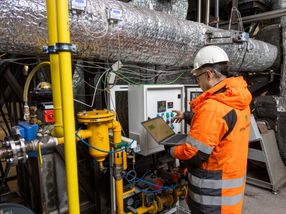
The demonstration plant, located where schwartz GmbH has its headquarters in Simmerath, is one part of an industrial heat treatment plant. The core technical components are innovative multi-fuel burners developed by schwartz subsidiary Econova GmbH. The first tests earlier this year confirmed that the demonstration plant can be run on hydrogen. Switching seamlessly between different fuel gases was also successfully demonstrated. This flexibility is particularly important as long as hydrogen is not readily available everywhere.
Next step: optimization of the whole system
The next step for research work will be to optimize the whole system. The control system will be further developed to ensure that optimal operating conditions are achieved regardless of the fuel gas used – hydrogen, natural gas, or propane.
Scaling up to an industrial scale presents yet another challenge: industrial heat treatment plants use several burners that must be synchronized with one another. The demonstration plant allows the engineers at schwartz GmbH to analyse these interactions under real-world conditions. The demonstration plant is a preliminary stage for a possible larger heat treatment plant on an industrial scale.
“It is crucial for our customers that they can invest in a plant today without having to commit to one single energy source. The multi-fuel technology creates the flexibility needed to gradually transition to hydrogen,” says Alexander Wilden, owner and CEO of the schwartz group.
“Projects like HyHeat bring the structural transformation of the Rhenish mining area to life and open up future prospects for growth and employment,” says Michael Theben, head of the Climate Protection Department at the Ministry of Economic Affairs, Industry, Climate Action and Energy of the State of North Rhine-Westphalia. “It is precisely these kinds of concrete projects, carried out in collaboration with local businesses, that bring significant value to the region. We hope to see more projects like this in the near future.”
Using waste heat to supply hydrogen
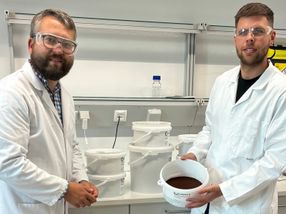
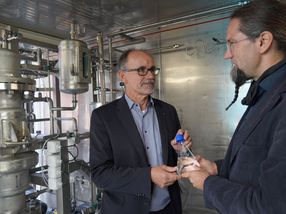
Forschungszentrum Jülich is not just involved in operating burners in the demonstration plant. As part of the HyHeat project, it is also exploring how industrial sites without a hydrogen pipeline could be supplied in future. The focus here is on chemical storage options for hydrogen. Scientists from the Institute for a sustainable Hydrogen Economy (IHE) at Forschungszentrum Jülich use simulations to assess which storage technology is best suited for use in industrial heat treatment plants. A key aspect here is heat integration. In supporting studies, IHE tested whether the heat contained in the exhaust gas can be used for the process of releasing hydrogen from the storage medium.


Other news from the department research and development