“See you at the DISCO₂!”: Carbon Dioxide as a Valuable Resource for Industry
The Federal Ministry of Federal Affairs, Transport, and Telecommunications (BMFTR) is providing over 24 million euros in funding for the DISCO₂ research initiative on industrial CO₂ utilization
Advertisement


In our daily lives, we encounter carbon—mostly from fossil sources—as a component of a wide variety of chemical products. Whether in plastics, fuels, or cosmetics, after a product is used, carbon is often released asCO₂ and thus contributes to climate change. Alternative sources of carbon are needed to reduce dependence on fossil raw materials, prevent the release of additional (“new”) CO₂ into the atmosphere, and enable a circular carbon economy in which carbon is kept in the cycle for as long as possible.
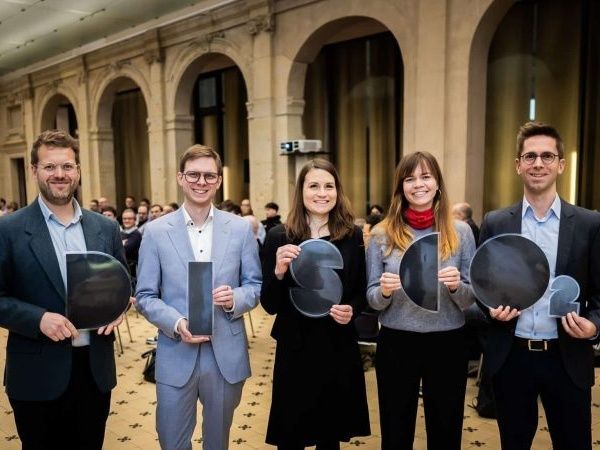
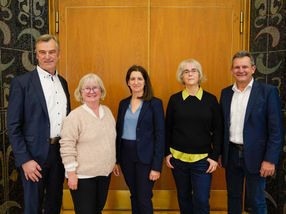
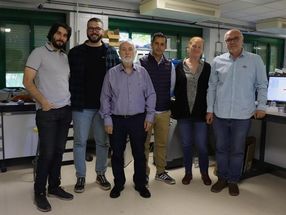
Christoph Soeder/DISCO₂ | From left to right: Prof. Dr. Sebastian Timmerberg (CC4E/HAW Hamburg), Dr. Julian Brünig (Project Management Jülich), Dr. Heike Mewis (BMFTR), Leonie Durschang (IKEM), Dr. Simon Verleger (hysolutions GmbH).
HAW Hamburg | CC4E
CO₂ as a raw material can be a solution. This approach is the focus of the DISCO₂ research initiative (“Disruptive Approaches to the Industrial Use of CO₂”), which is funded by the Federal Ministry of Research, Technology, and Space (BMFTR) with over 24 million euros. On November 10 and 11, 2026, project representatives presented the conceptual foundations for innovative ways to utilize CO₂ at a kick-off event in Berlin and discussed potential applications as well as the next steps in the project.
A total of 41 partner institutions from academia, business, and industry are collaborating in DISCO₂ across 13 independent research projects. In these projects, they are investigating various aspects of carbon capture and utilization (CCU). The focus is on innovative capture methods as well as novel ways of converting CO₂ into a wide variety of products, such as ethylene, acetate, and methanol. All partners share the goal of developing new, climate-friendly ways to harness carbon from CO₂ for industrial use.
The accompanying project WiNCO₂ promotes interdisciplinary networking among all DISCO₂ project participants and coordinates public communications. hysolutions GmbH and the Competence Center for Energy Transition (CC4E) at the Hamburg University of Applied Sciences (HAW Hamburg) are responsible for knowledge transfer and public relations. The Institute for Climate Protection, Energy, and Mobility (IKEM) is conducting research on the legal framework and obstacles in the field of CCU. Based on this research, future solutions for the legal framework will be developed.
Dr. Heike Mewis, a program officer at the BMFTR, opened the status meeting at the Berlin-Brandenburg Academy of Sciences and Humanities. The conference program included presentations and discussions on conceptual priorities, technical and economic potential, future milestones, and expected project outcomes. The project is scheduled to run for three years.
Dr. Simon Verleger, WiNCO₂ coordinator at hysolutions GmbH: “The issues addressed in the project are highly complex, so tight project management is required to efficiently coordinate the individual projects. Only by understanding the work of others can we identify synergies—for example, when a product from one project can serve as a raw material for the next, or when a technology from one project can also benefit another. We need such connections to transform individual processes into a seamless value chain.”
Leony Ohle, Head of Energy Law, IKEM – Institute for Climate Protection, Energy, and Mobility e.V.: “For the technical developments in DISCO₂ to eventually become marketable solutions, an appropriate legal framework is needed. We are therefore examining where regulations are lacking or stand in the way of implementation, and how they can be further developed to be fit for the future. Direct exchange with the participating research projects is particularly valuable for this work.”
Prof. Dr. Sebastian Timmerberg, Competence Center for Energy Transition (CC4E) at HAW Hamburg: “CO₂-based products benefit the climate if they release fewer greenhouse gases than today’s fossil-fuel-based products. And this must apply to all life cycle phases: from production, through use, to disposal. To investigate precisely this climate benefit in the DISCO₂ projects, we coordinate the life cycle assessments for each project, thereby ensuring comparable results.”
Note: This article has been translated using a computer system without human intervention. LUMITOS offers these automatic translations to present a wider range of current news. Since this article has been translated with automatic translation, it is possible that it contains errors in vocabulary, syntax or grammar. The original article in German can be found here.


Other news from the department science