Nanoparticles remain unpredictable
Advertisement


The way that nanoparticles behave in the environment is extremely complex. There is currently a lack of systematic experimental data to help understand them comprehensively, as ETH environmental scientists have shown in a large overview study. A more standardised approach would help to advance the research field.

The researchers evaluated the experimental data published in the scientific literature using a network analysis. This analysis reveals which types of nanoparticles (blue) have been studied under which environmental conditions (red).
Thomas Kast
The nanotech industry is booming. Every year, several thousands of tonnes of man-made nanoparticles are produced worldwide; sooner or later, a certain part of them will end up in bodies of water or soil. But even experts find it difficult to say exactly what happens to them there. It is a complex question, not only because there are many different types of man-made (engineered) nanoparticles, but also because the particles behave differently in the environment depending on the prevailing conditions.
Researchers led by Martin Scheringer, Senior Scientist at the Department of Chemistry and Applied Biosciences, wanted to bring some clarity to this issue. They reviewed 270 scientific studies, and the nearly 1,000 laboratory experiments described in them, looking for patterns in the behaviour of engineered nanoparticles. The goal was to make universal predictions about the behaviour of the particles.
Particles attach themselves to everything
However, the researchers found a very mixed picture when they looked at the data. “The situation is more complex than many scientists would previously have predicted,” says Scheringer. “We need to recognise that we can’t draw a uniform picture with the data available to us today.”
Nicole Sani-Kast, a doctoral student in Scheringer’s group and first author of the analysis published in the journal PNAS, adds: “Engineered nanoparticles behave very dynamically and are highly reactive. They attach themselves to everything they find: to other nanoparticles in order to form agglomerates, or to other molecules present in the environment.”
Network analysis
To what exactly the particles react, and how quickly, depends on various factors such as the acidity of the water or soil, the concentration of the existing minerals and salts, and above all, the composition of the organic substances dissolved in the water or present in the soil. The fact that the engineered nanoparticles often have a surface coating makes things even more complicated. Depending on the environmental conditions, the particles retain or lose their coating, which in turn influences their reaction behaviour.
To evaluate the results available in the literature, Sani-Kast used a network analysis for the first time in this research field. It is a technique familiar in social research for measuring networks of social relations, and allowed her to show that the data available on engineered nanoparticles is inconsistent, insufficiently diverse and poorly structured.
More method for machine learning
“If more structured, consistent and sufficiently diverse data were available, it may be possible to discover universal patterns using machine learning methods,” says Scheringer, “but we’re not there yet.” Enough structured experimental data must first be available.
“In order for the scientific community to carry out such experiments in a systematic and standardised manner, some kind of coordination is necessary,” adds Sani-Kast, but she is aware that such work is difficult to coordinate. Scientists are generally well known for preferring to explore new methods and conditions rather than routinely performing standardized experiments.
Original publication
Sani-Kast N, Labille J, Ollivier P, Slomberg D, Hungerbühler K, Scheringer M; "A network perspective reveals decreasing material diversity in studies on nanoparticle interactions with dissolved organic matter"; PNAS; 2017, 114: E1756-E1765
Praetorius A, Gundlach-Graham A, Goldberg E, Fabienke W, Navratilova J, Gondikas A, Kaegi R, Günther D, Hofmann T, von der Kammer F; "Single-particle multi-element fingerprinting (spMEF) using inductively-coupled plasma time-of-flight mass spectrometry (ICP-TOFMS) to identify engineered nanoparticles against the elevated natural background in soils"; Environonmental Science: Nano; 2017, 4: 307-314


Other news from the department science




















Most read news












More news from our other portals


























Last viewed contents

Take ... Baking Powder! Simple Ingredients for a Chemical Hydrogen Storage System - Easy to Store and Transport
Deep brines in northern Germany could be among Europe's largest lithium resources - Project RoLiXX aims to develop extraction methods that work even under high-salinity conditions
Metso introduces an advanced lithium carbonate process to support battery materials production - At the core of the process is soda pressure leaching, which selectively extracts lithium with fewer soluble impurities in one pass
Longer-lasting and more sustainable green hydrogen production - The findings impact the ability to achieve a lasting and sustainable hydrogen-based energy economy
Merck and Mulliken Center for Theoretical Chemistry Collaborate in Machine Learning Project - The three-year collaboration will focus on the development of new tools for computational chemistry modelling as well as new molecular representations
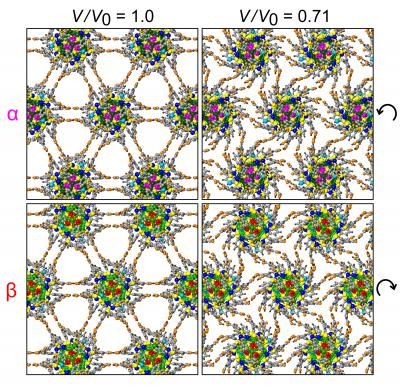
Self-assembled superlattices create molecular machines with 'hinges' and 'gears'

On the way to sustainable chemistry? Iron makes it possible - Hydroformylation of olefins using iron catalysis and light
3M to sell pressurized polyurethane foam adhesives business
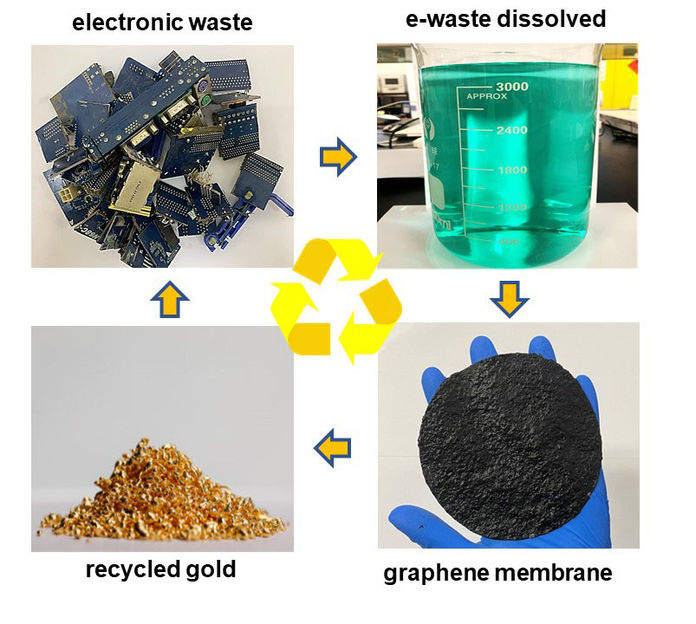
Graphene as 'the philosopher’s stone’: turning waste into gold - "This apparent magic is essentially a simple electrochemical process"

Cleaner air as a result of coronavirus lockdown - Lockdowns in early summer 2020 meant that the amount of soot in the atmosphere, which is harmful to the climate and to health, almost halved
DSM and Chemtrix sign collaboration agreement in Continuous Flow Chemistry