From Pollutant to Valuable Chemical Product
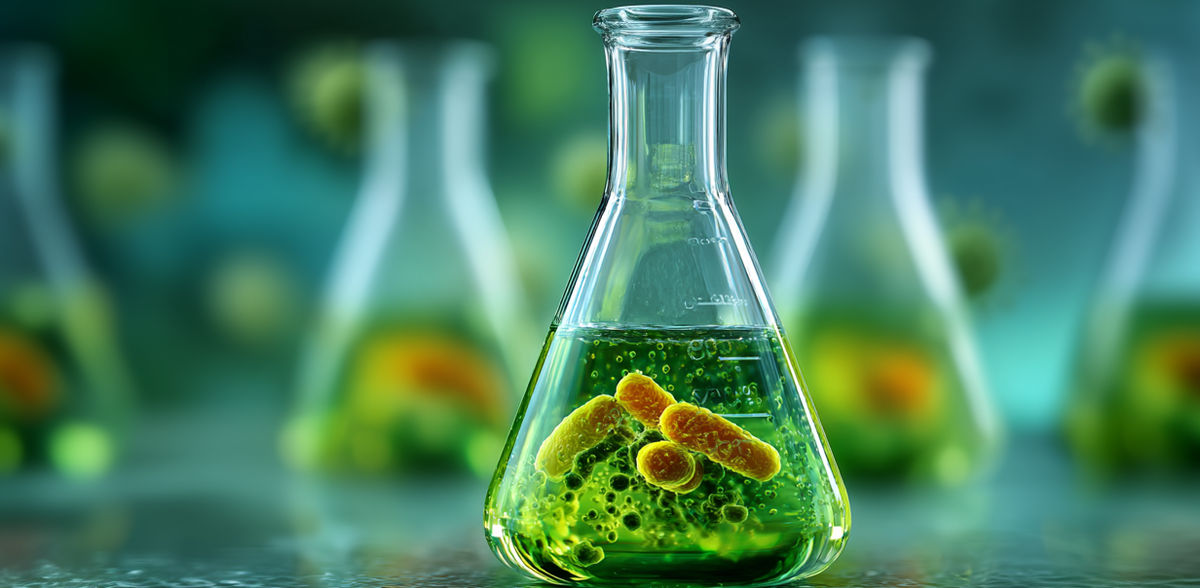
Researchers have uncovered how bacteria use two nickel-containing enzymes to convert the greenhouse gas CO2 into energy-rich organic compounds
Advertisement


In two studies that have just been published in the renowned journal Nature Catalysis, the research teams show how the two nickel-containing enzymes carbon monoxide dehydrogenase (CODH) and acetyl-CoA synthase (ACS) transform CO2 into activated acetic acid. These detailed insights into the mechanism provide new approaches for developing synthetic catalysts that could use CO2 as a raw material.
Two Enzymes – How Structural Changes Control the Reaction
The investigations focus on two enzymes in which nickel and iron ions are uniquely linked in the active sites: CODH and ACS. These enzymes work hand in hand to first convert CO2 into carbon monoxide (CO) and then into acetyl-CoA, an activated form of acetic acid. This reaction chain is an essential part of the so-called Wood–Ljungdahl pathway, one of the oldest biological processes for carbon fixation.
In one study, scientists from Humboldt Universität, in collaboration with researchers from TU Berlin, demonstrated that the nickel ion in the active site of CODH not only binds CO2 but also supplies the electrons required for the reaction. This flexibility makes the nickel ion the key player in CO2 activation and conversion. Using a combination of X-ray diffraction and spectroscopy on CODH crystals, they succeeded for the first time in visualizing all catalytically relevant states with bound reaction partners in the enzyme at atomic resolution.
“Since our first structure of Ni-containing carbon monoxide dehydrogenases in 2001, I have wondered why these enzymes need Ni ions. Our new work provides an answer, which lies in the unusual coordination of nickel,” says Prof. Holger Dobbek, head of the Structural Biology and Biochemistry research group at Humboldt Universität. Yudhajeet Basak, the study’s first author, adds: “By understanding the ancient mechanisms of CO₂ fixation, we can transfer them to the development of novel catalysts that could accelerate the transition to a carbon-neutral industry.”
In a complementary study led by Prof. Petra Wendler from the University of Potsdam, the researchers investigated how the binding of small molecules to the nickel center of ACS trigger large-scale structural changes in the enzyme. Using high-resolution cryo-electron microscopy, the team was able to visualize six previously unknown intermediate states of the enzyme. The results show that the enzymes do not operate as rigid structures; rather, ligand binding induces dynamic movements that control the reaction process.
Relevance for Climate Protection and Sustainable Chemistry
The findings are significant not only for basic research. They may also indicate how to transfer biological principles of catalysis to technical processes. In the future, synthetic catalysts modeled after these enzymes could efficiently convert CO2 into valuable chemical products – an important contribution to a more sustainable circular economy.
Original publication
Yudhajeet Basak, Christian Lorent, Jae-Hun Jeoung, Ingo Zebger, Holger Dobbek; "Metalloradical-driven enzymatic CO2 reduction by a dynamic Ni–Fe cluster"; Nature Catalysis, 2025-8-1
Jakob Ruickoldt, Julian Kreibich, Thomas Bick, Jae-Hun Jeoung, Benjamin R. Duffus, Silke Leimkühler, Holger Dobbek, Petra Wendler; "Ligand binding to a Ni–Fe cluster orchestrates conformational changes of the CO-dehydrogenase–acetyl-CoA synthase complex"; Nature Catalysis, Volume 8, 2025-7-11


Other news from the department science





















Most read news












More news from our other portals

























Last viewed contents
Chemical shifts help track molecules breaking apart in real time - Ultrafast X-ray photoelectron spectroscopy offers a new way to watch reactions, atom by atom
Record efficiency - tandem solar cells made from perovskite and organic material - “This was only possible by combining two major breakthroughs”

Searching for answers on the sea floor - How abiotic organic molecules are formed
Eastman Increases ACETYLS Prices on April 1
Molybdenene – the "Metallic" Relative of Graphene - The researchers created the new 2D material using a microwave
LANXESS underpins BRIC strategy with two acquisitions in Asia - LANXESS to acquire chemical businesses of Indian company Gwalior Chemical Industries Ltd for EUR 82.4 million

RCT Reichelt Chemietechnik | Hexagon head screws | Reichelt Chemietechnik
WACKER Officially Opens New Production Site in the USA
Waterloo researchers turning plastic waste into vinegar - The reaction takes place in water, making it particularly relevant for addressing plastic pollution in aquatic environments
Traction for sustainable healthcare plastics - BIOVOX successfully closes €2.2 million seed round
Analysis system enables targeted investigation of antiviral surfaces for material developers - Use of real-time polymerase chain reaction to test antiviral effectiveness
