Tailor-made functionalized gelatin – manufactured with reproducible results
Fraunhofer scales up chemical functionalisation
Advertisement


Gelatin is a versatile natural material. To tailor its properties specifically to the requirements of various applications in medicine, diagnostics, and cosmetics, the Fraunhofer Institute for Interfacial Engineering and Biotechnology IGB has developed a toolbox for chemical functionalization. With the help of automated processes, the modifications can now be scaled under defined conditions, and reproducible batches of modified gelatin can be produced on a scale ranging from grams to kilograms for customer sampling.
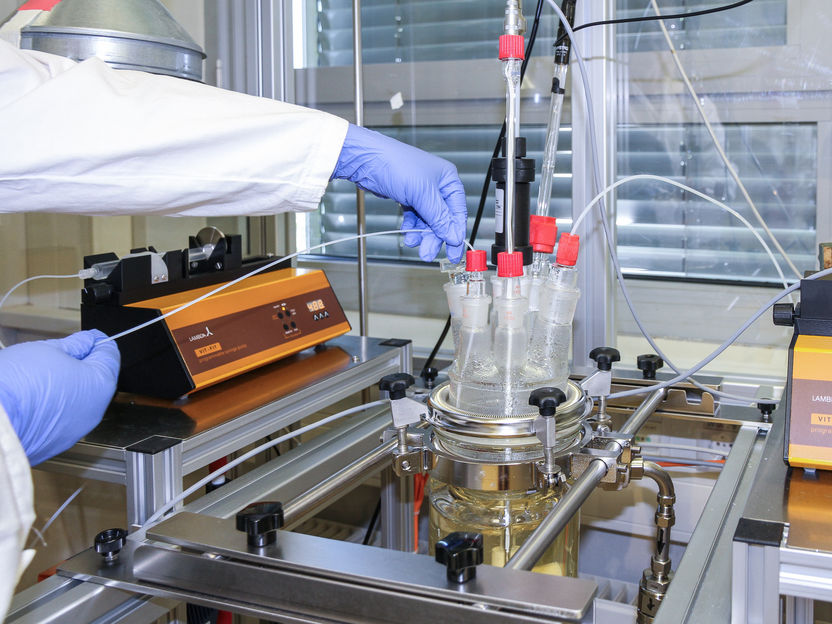
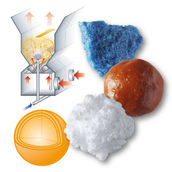
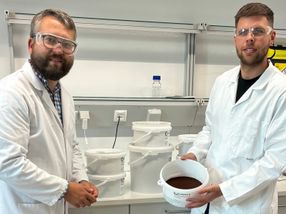
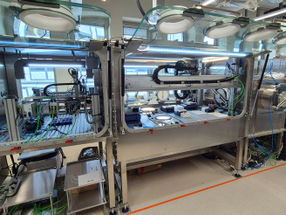
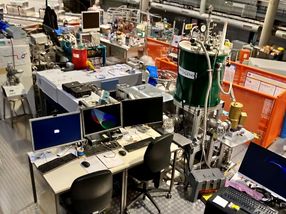
Automated reactor system for scaling up the chemical modification of biopolymers
© Fraunhofer IGB
Gelatin doesn't just hold gummy bears, cream puddings, and soft capsules together. Thanks to its ability to form seamless and mechanically stable films, this biopolymer is also in demand for coatings, such as on textiles, paper, or photographic film, where gelatin acts as a carrier for pigments and chemicals. The natural protein is also highly biocompatible, making it suitable for applications in cosmetics and medicine, such as a carrier for active ingredients and dyes or as a swellable wound dressing.
However, it is often necessary to specifically tailor the material properties, for example, for use in 3D bioprinting. Due to its temperature-dependent gelling behavior, gelatin is only fluid at higher temperatures but loses its dimensional stability under physiological conditions. In such cases, the Fraunhofer Institute for Interfacial Engineering and Biotechnology IGB optimizes the properties of gelatin to meet specific requirements using chemical modification reactions.
“For use in bioprinting, we modify gelatin in such a way that we can specifically adjust both the properties of the bio-ink and the structural stability after printing,” explains Dr. Achim Weber, Head of the Biofabrication and Materials Development Division at Fraunhofer IGB. In addition to the gelation and melting points – and thus the gelation behavior – the viscosity, solubility, and charge of the biopolymer can also be adapted to the specific application.
A toolbox for customized functionalization
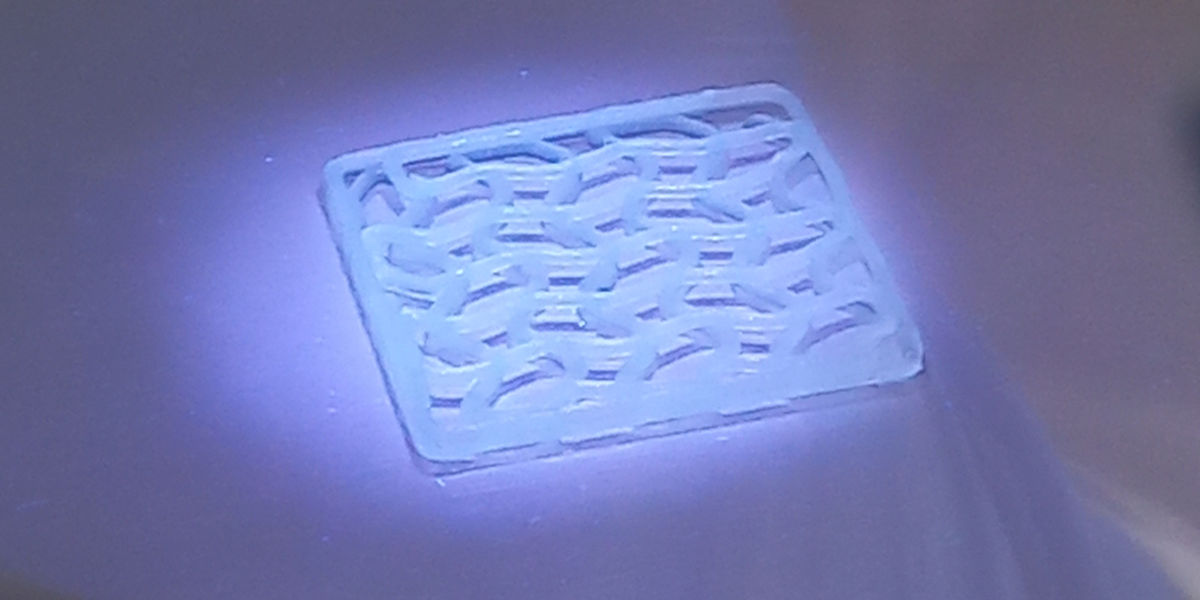
In the context of bioprinting, researchers typically use methacrylic anhydride to make gelatin cross-linkable. “Methacrylated gelatin combines the biocompatibility of gelatin with the ability to cure under UV light,” explains Melanie Dettling, who performs and monitors the chemical modifications in the lab. As soon as the modified gelatin is exposed to UV light – with the aid of a photoinitiator – after the printing process, it cross-links to form a solid hydrogel. In this case, the material mimics the body’s own extracellular matrix (ECM) and, as a structural scaffold, supports the adhesion, growth, and differentiation of cells, allowing new tissue to form.
Gelatin modified in this way was used in the EU project TriAnkle, together with collagen and modified collagen. Here, the biomaterials served as a customized delivery system for cells and growth factors. Preclinical studies using custom-fit implants for ankle joint defects demonstrated significantly improved regeneration of tendon and cartilage tissue, reduced inflammatory responses, and accelerated healing.
Depending on the intended application, other functionalizations can also achieve the desired results. “For example, we introduce thiol groups into biopolymers to enable cross-linking via so-called click reactions,” explains Dettling. Cross-linking can thus occur in various ways – photochemically using UV radiation, thermally, or through chemical reactions.
Using their flexible modular system, the researchers were also able to increase the positive charge of gelatin. In a point-of-care rapid test, such cationized gelatin hydrogels were successfully used to embed key reaction components and immobilize the negatively charged target molecules.
Automated, standardized process for consistent material properties
To test the properties of the optimized material, partners from research and industry usually require larger quantities of the functionalized biopolymers. To enable scalable and reproducible production of functionalized gelatin, the materials development team at Fraunhofer IGB has now established new processes in automated reactor systems.
In the automated reactors, all relevant process parameters are systematically recorded and adjusted according to a specially defined standard operating procedure (SOP) – from the temperature and the inflow of, for example, methacrylic anhydride, to the pH value and the amount of sodium hydroxide solution added. Dettling was able to demonstrate that the resulting degree of methacrylation of the gelatin in the 1-liter reactor is linearly proportional to the excess methacrylic anhydride in the feed solution – a finding that could not be demonstrated in this way during manual production in a flask.
“In our 1-liter reactor, we can now reproducibly produce 100 grams of modified gelatin with absolutely consistent quality,” says Dettling. The applied chemist is currently transferring the standardized process control to reactors with volumes of 5 and 10 liters to demonstrate that the material properties remain reproducible even with further scaling. In a single batch, up to one kilogram of functionalized gelatin can then be produced.
Comparable functionalizations of sample quantities
The automated process control makes it possible to carry out different chemical functionalizations under standardized process conditions, thereby allowing the effects of the modifications to be directly compared with one another.
“We can now clearly attribute differences in material properties to the respective chemical modification and rule out the possibility that they are due to varying manufacturing conditions,” explains Dettling. The manufactured materials are made available to companies and research partners for sampling. These partners can test the material properties, evaluate applications, or conduct feasibility studies for their product developments without having to establish their own development or scale-up processes.
Wide range of applications for functionalized bio-based polymers
“Modified gelatin is suitable as a hydrogel, as carrier material, or structuring component in biomedical systems or personal care products, as well as for functional materials and coatings that require specific interactions, barrier properties, or adhesive properties,” said Weber. This also includes in-vitro test systems and microfluidic diagnostic platforms that require defined, reproducibly manufacturable materials with controlled surface or material properties.
The process concepts used at Fraunhofer IGB are not limited to gelatin. Rather, the material properties of other bio-based polymers – such as collagen, chitosan, inulin, and hyaluronic acid – can also be specifically tailored due to their good chemical modifiability, whether for encapsulation to achieve controlled release or for coating applications.


Other news from the department science





These products might interest you