Hydrogen Research on an Industrial Scale
KIT Opens New Research Platform for Integrated Hydrogen Technologies at the Energy Lab
Advertisement


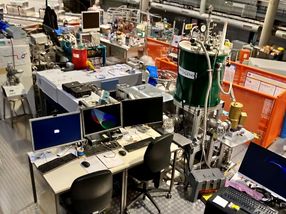
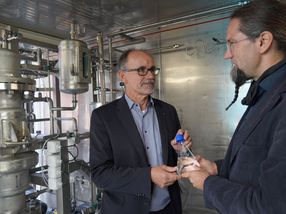
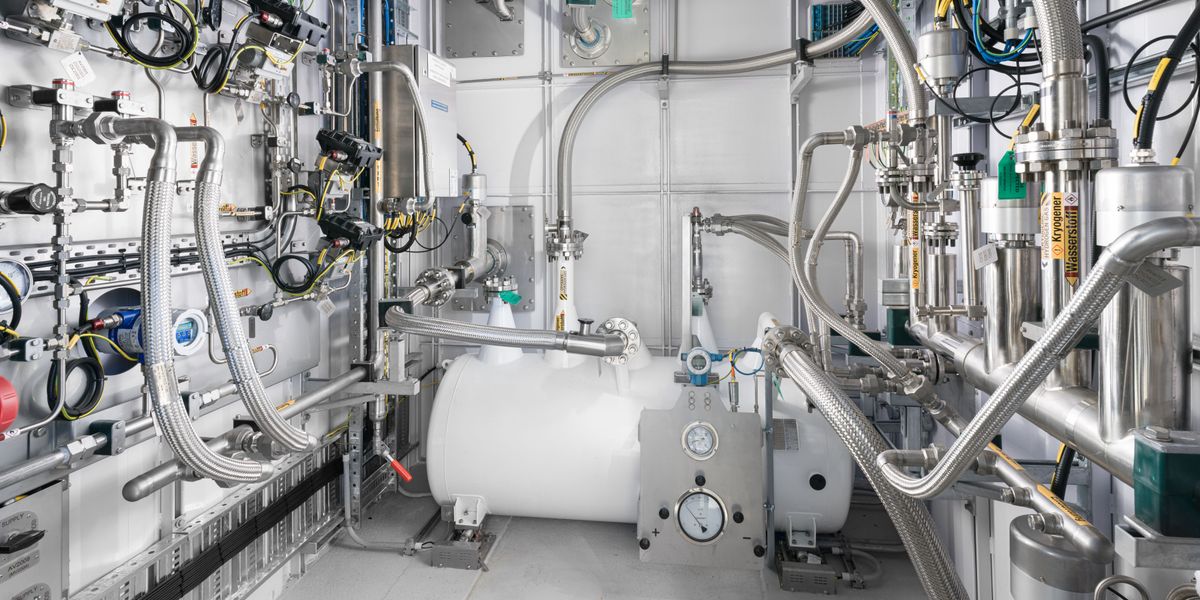
With the launch of the hydrogen Integration Platform (HIP), the Karlsruhe Institute of Technology (KIT) is expanding its research infrastructure for hydrogen technologies on the North Campus. The platform connects facilities and demonstrators along the entire hydrogen value chain—from electrolysis and liquefaction through storage and transport to use in the energy system. Under real-world conditions, researchers are investigating how hydrogen technologies can be reliably, flexibly, and efficiently integrated into a climate-neutral energy system in the future.
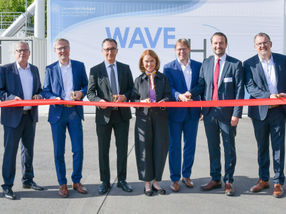
The Hydrogen Integration Platform (HIP) brings together several demonstration facilities for storing, distributing, and utilizing hydrogen. On June 18, 2026, KIT opened the new research infrastructure on the North Campus at the Energy Lab site.
“With the Hydrogen Integration Platform, we at KIT have created a highly innovative research environment because it allows us to study the interaction of various hydrogen technologies,” says Professor Oliver Kraft, Vice President for Research, Teaching, and Academic Affairs at KIT. “This makes it possible not only to develop new solutions for a climate-neutral energy system in the laboratory, but also to test them under realistic conditions.”
Research Infrastructure for the Hydrogen Systems of the Future
At the heart of the HIP is Germany’s largest non-commercial hydrogen liquefaction system. The facility can liquefy 50 kilograms of hydrogen daily and makes it available both for research projects at KIT and for external partners. In addition, there are test environments for energy storage systems, real-time simulations of their integration into future energy grids, and new electrolysis processes. Researchers also plan to investigate hydrogen-powered rail systems under realistic conditions. “With the HIP, we can test key components of the hydrogen value chain within an integrated infrastructure,” explains Professor Giovanni De Carne from KIT’s Institute of Technical Physics (ITEP) and future director of the facility. “This opens up new opportunities to further develop technologies in a targeted manner and tailor them to specific applications.”
In addition, a test track for a hybrid energy pipeline is being built on the HIP site, in which liquid hydrogen and electrical energy can be transported together. To achieve this, researchers are combining a pipeline for extremely cold, liquid hydrogen with superconducting power cables, which transmit electrical energy with virtually no loss at these temperatures. The infrastructure could efficiently transport large amounts of energy over long distances—for example, from wind and solar farms or port terminals to industrial plants, airports, or logistics centers. “Hybrid energy pipelines could become compact energy highways for a future hydrogen economy,” says Professor Tabea Arndt of ITEP. “The combination of a hydrogen pipeline and superconducting cables makes it possible to flexibly link energy supply, industry, and mobility.” Superconducting motors for large vehicles could also benefit from being combined with liquid hydrogen. The project participants also plan to investigate this experimentally.
Research for Building the Hydrogen Economy
With HIP, KIT is creating a platform where complex hydrogen systems can be studied and further developed under real-world conditions. It enables the early testing of new technologies, the development of operating strategies, and the analysis of their interaction with power grids and industrial applications. In the future, the research infrastructure is intended to further strengthen collaboration with industry partners and help bring new hydrogen technologies to market more quickly.
Note: This article has been translated using a computer system without human intervention. LUMITOS offers these automatic translations to present a wider range of current news. Since this article has been translated with automatic translation, it is possible that it contains errors in vocabulary, syntax or grammar. The original article in German can be found here.


Other news from the department science