EU project UNCOVER aims to convert CO₂ into ten marketable products
19 partners are testing CO₂ conversion on an industrial scale

Advertisement


The European Commission has awarded €7 million to UNCOVER, a new Horizon Europe project bringing CO₂ conversion technologies closer to industrial-scale deployment and market uptake. As a project partner Steinbeis Europa Zentrum is leading the work package on exploitation, scaling and market entry, and is responsible for managing the project data.
Advancing Europe's climate neutrality and circular economy
Carbon Capture and Utilisation (CCU) is a key component of Europe’s transition towards climate neutrality and a more circular economy. It turns captured CO₂ into useful products, reducing reliance on fossil-based and resource-intensive feedstocks, and, as a result, also cutting their imports, strengthening Europe’s energy resilience. However, the wider deployment of CCU technologies is still constrained by high energy demand, technology costs, the use of virgin critical raw materials, the limited technology readiness of some conversion routes and insufficient integration across the CCU value chain.
UNCOVER will address these challenges by demonstrating how CO₂ conversion technologies can be scaled up while improving their sustainability and economic viability. The project will work with CO₂ emissions from three representative European industries: a biogas upgrading unit at a waste management plant, a biomass boiler at a wood manufacturing plant and a clinker kiln at a cement plant.

From CO₂ emissions to ten marketable products
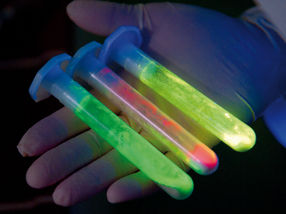
Starting in September 2026, the four-year project will bring together 19 partners from eight European countries to demonstrate six innovative CO₂ Conversion Technologies (CCTs) and one Secondary Conversion Technology (SCT). The technologies will convert CO₂ into ten products, including three pigments, microalgal biomass, biomethanol, bioformaldehyde, microbial protein, polyhydroxybutyrate and carbonated cementitious materials.
These products will be validated for applications across the chemicals, fuels and construction sectors, with the aim of demonstrating their potential to replace fossil-based and resource-intensive alternatives. UNCOVER will assess the technologies and products through integrated life-cycle assessment (LCA) and techno-economic analysis (TEA), providing evidence on their environmental performance, energy requirements, costs and scalability.
“UNCOVER is about proving that CO₂ can be used as feedstock to produce biodegradable plastics, wood-panel resins, low-carbon fuels and cement-based materials, competing on cost, performance and sustainability with fossil-based alternatives. By demonstrating seven CCU routes at industrial scale across three real industrial emission sources, we are building the evidence base European industry needs to scale up CO₂ utilisation and accelerate industrial decarbonisation," says Pablo González, UNCOVER Project Coordinator, ITA (Instituto Tecnológico de Aragón).
From demonstration to industrial deployment
UNCOVER’s ambition extends beyond the four-year project. By 2032, the project aims to support the deployment of three large-scale CCTs, with three to five CO₂-based products beginning to displace fossil- and resource-intensive feedstocks. Looking further ahead, the project estimates that 31 UNCOVER CCTs could be deployed by 2040, capturing around 0.1 Mt of CO₂ and generating an estimated 150 new jobs and €180 million in profit for CCT developers. By 2050, the wider deployment of UNCOVER technologies could contribute to capturing up to 250 Mt of CO₂ across Europe, including 1.6 Mt captured through UNCOVER technologies, while helping reduce Europe’s dependence on imported fossil resources by up to 10%.
A multidisciplinary European consortium
UNCOVER will be implemented by a multidisciplinary consortium including six large industries, five SMEs, three research and technology organisations, four universities and one sectoral association.
Steinbeis Europa Zentrum assisted with the proposal writing process, helped to determine the key performance indicators for the ‘Impact’ section, and developed a preliminary strategy for the market launch of the UNCOVER solutions. As a project partner, it now leads the work package on exploitation, scaling and market entry, and is responsible for managing the project data.
- Coordinated by the Instituto Tecnológico de Aragón (ITA), with the University of Valladolid (UVA) as technical coordinator, the consortium brings together complementary expertise covering the full innovation chain, including: Urbaser S.A. (URB), Sonae Arauco España-Soluciones de Madera S.L. (SON), Holcim Polska S.A. (HOL), Allmicroalgae Natural Products S.A. (ALM), Viscofan España S.L. (VIS) and Ercros S.A. (ERC);
- Energo S.A.S. (ENE), Syspro Automation S.L. (SYS), Biotrend – Inovação e Engenharia em Biotecnologia S.A. (BIO), Chimar (Hellas) A.E. (CHI) and Steinbeis Innovation gGmbH (SIG);
- Associação Oceano Verde – Laboratório Colaborativo para o Desenvolvimento de Tecnologias e Produtos Verdes do Oceano (GCL) and Holcim Innovation Center SAS (HIC);
- University of Zaragoza (UZ), Imperial College London (IC) and Silesian University of Technology (SUT);
- CO₂ Value Europe (CVE)


Other news from the department science