Emissions Trading and Benchmarks: Smoke and Mirrors Instead of a Reality Check
According to the VCI, the European Commission is missing an opportunity to adapt the European Emissions Trading System to reality

Advertisement


The European Commission has presented its plans for reforming the European Emissions Trading System (ETS) and its benchmarks for the coming years. The German chemical industry Association (VCI) views these as nothing more than insufficient cosmetic changes.
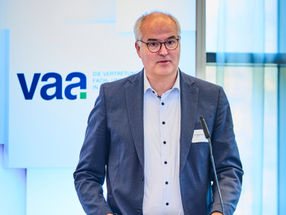
Wolfgang Große Entrup, CEO of the VCI, criticizes: “The European Commission’s plans are dangerous window dressing and risk turning industrial restructuring into brutal industrial decline. Climate protection must not lead to deindustrialization. If policymakers drastically drive up CO2 costs before companies even have a chance to invest in new, green processes, they are systematically pulling the rug out from under our industry. That is not a transformation policy; it borders on economic devastation. Those who are supposed to invest need breathing room, not a stranglehold.”
Prerequisites for Transformation Not in Sight
In the VCI’s view, a CO2 price can only reduce emissions if companies are able to invest on a large scale in climate-friendly production. In recent years, companies have already built pilot plants, electrified operations, and tested low-carbon processes. The next step involves investments worth billions in new generations of facilities.
Große Entrup explains: “The transformation of industry is not failing because of a lack of will on the part of companies, but because of a lack of prerequisites: affordable green electricity, hydrogen networks, grid connections, and customers for climate-friendly products are, in many places, a distant dream.”
Free allowances remain—but will be devalued
The VCI generally welcomes the fact that the European Commission intends to continue allocating free CO2 allowances for longer—they are indispensable for companies’ international competitiveness. However, the planned mandatory investment in transformation technologies undermines this step. “Business leaders must decide where to invest, not the government. Policymakers must facilitate investments—not mandate them,” emphasizes the VCI’s chief executive.
Reduction Pace Must Reflect Reality
From the VCI’s perspective, the reform also falls short when it comes to the future pace at which industry is expected to reduce its emissions. Groß-Entrup says: “Emissions trading must not outpace reality. Our companies would like to produce in a climate-friendly manner more quickly. However, as long as electricity and hydrogen grids, CO₂ infrastructure, and markets fail to keep pace, increased pressure will lead to plant closures. Production will continue nonetheless—but abroad and often with a worse carbon footprint.” To take the pressure off the system, the pace of emissions reductions must be slowed immediately, not just starting in 2031. Overall, the pace must be aligned with the EU’s 2050 climate neutrality goal. So far, industry has been forced to move too quickly.
Benchmarks Must Not Be Tightened
Alongside the ETS reform, the Commission has also presented a proposal on the “fallback” benchmarks. These values determine how many allowances companies receive free of charge for certain processes. The VCI is calling for them to be set at least at the 2025 level until the conditions for the transition are in sight. Entrup stated: “Anyone who tightens the benchmarks now is depriving companies of the funds they need to invest in new processes.”
Overall Impact of the System Is Crucial
As the reform process continues, it is now essential not to view the individual instruments in isolation. Große Entrup says: “Emissions trading does not reduce emissions through ever-higher costs, but through real investments. Every cog in the EU system must finally be geared toward competitiveness. Otherwise, Europe will lose its industry and its innovative strength. Empty factories in Europe do nothing to help the global climate.”
Background
The EU Emissions Trading System (ETS) is considered the EU’s most important climate protection tool: Companies must purchase allowances for their CO₂ emissions—the scarcer these become, the more expensive it is to emit.
A portion of the allowances is allocated to industry free of charge to offset competitive disadvantages compared to companies outside Europe. The exact number depends on so-called benchmarks—technical reference values for particularly efficient production. There are benchmarks for individual products and product groups (52 in total), as well as a fuel benchmark and a heat benchmark. These serve as a “fallback” when there is no specific product benchmark for a given activity. If the benchmarks are tightened, the free allocation decreases—regardless of whether companies are already able to meet the technical requirements for lower-emission production. The European Commission formally adopted the benchmarks for the period 2026 to 2030 in June 2026. However, to secure the necessary approval from member states, it agreed to revise the fallback benchmarks for process heat and fuels again in the near future. This revision is to be completed more quickly, separate from the ETS reform.
How quickly allowances become scarcer overall is, in turn, determined by the linear reduction factor: It specifies the percentage by which the total number of allowances available in the ETS decreases each year until it reaches zero. The factor acts like a cruise control for the entire system: the higher the factor, the faster the supply of allowances shrinks—regardless of whether industry, utilities, and infrastructure can keep pace with this rate. At the current rate of reduction, the quantity of allowances is falling to zero faster than envisaged by the EU’s overall path to climate neutrality by 2050—meaning that the energy and industrial sectors covered by the ETS would become CO₂-neutral faster than the rest of the European economy.
Free allocation, benchmarks, and the linear reduction factor thus function as a single system: Together, they determine the extent and speed at which companies are financially burdened—regardless of whether the actual conditions for emissions reductions are already in place.
Note: This article has been translated using a computer system without human intervention. LUMITOS offers these automatic translations to present a wider range of current news. Since this article has been translated with automatic translation, it is possible that it contains errors in vocabulary, syntax or grammar. The original article in German can be found here.



Other news from the department politics & laws