Bio-based Waxes: The Key to Sustainable Packaging Networks
Even just 1.5% bio-based wax additive measurably alters the flow behavior, stiffness, and strength of PBS
Advertisement


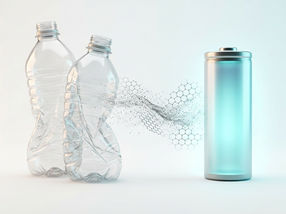
Bio-based waxes derived from renewable raw materials could replace petrochemical property modifiers in plastic applications in the future. As part of the WIR!BioZ alliance—which is part of the nationwide TransBIB methane network—the Fraunhofer IMWS and DEUREX AG developed biodegradable wax additives for bioplastics and demonstrated their successful scaling from the laboratory to industrial packaging applications.
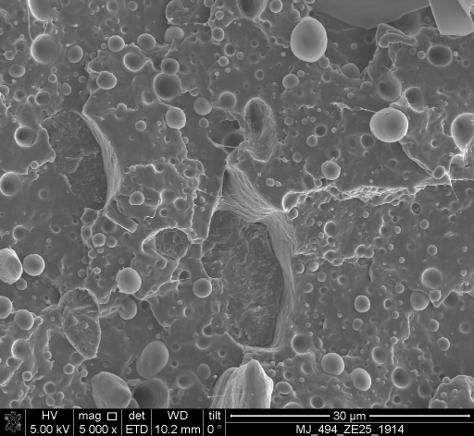
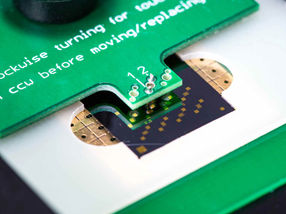
Microstructure of a mixture of a biomer and the bioplastic PBS.
As part of the WIR! alliance “BioZ – Bio-based Innovations from Zeitz and Central Germany,” , researchers from the Fraunhofer Institute for Microstructure of Materials and Systems IMWS collaborated with DEUREX AG on new bioplastics that are fully biodegradable and can be used as drop-in solutions for existing plastic applications. BioZ is anchored as a competence hub within the nationwide TransBIB meta-network. TransBIB connects companies, research institutions, and innovation hubs in the industrial bioeconomy with the goal of specifically accelerating the transfer of bio-based technologies into industrial applications.
The project focused on the development of bio-based, wax-based property modifiers (“biomers”) as a sustainable alternative to the petrochemical modifiers used to date. The waxes developed are biodegradable and can be produced on an industrial scale from renewable raw materials. The goal of the project was to demonstrate the partial or complete substitution of petrochemical property modifiers in polymeric materials while simultaneously developing new formulations for bio-based packaging applications.
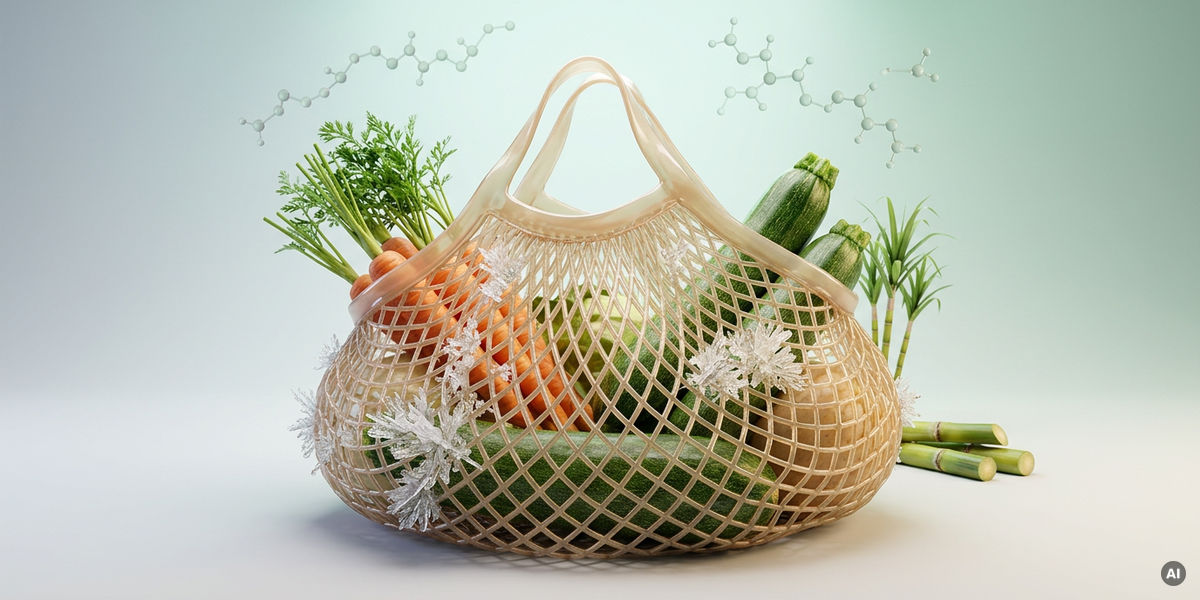
Another focus was on the development of plastic compounds for packaging nets in the fruit and vegetable sector. The goal was to partially or completely replace conventional polymer materials with engineering biopolymers without compromising processability or product properties.
The unique feature of the developed approach lies in its high degree of variability. Through the use of biomers, the processing properties of biopolymers such as polybutylene succinate (PBS) can be specifically adjusted—toward both higher and lower viscosities. At the same time, the dispersion of additional fillers—such as color pigments—is improved without compromising the biodegradability of the overall system. No comparable platform technology based on renewable raw materials is currently known.
While many modifiers used today are based on petrochemical waxes or graft copolymers and are only of limited suitability for biodegradable applications, the approach developed here aims for direct integration into existing industrial processes. The biomers can be processed on existing equipment, thereby opening up a comparatively simple path to the sustainable transformation of existing plastic applications.
The development was based on the targeted adjustment of the biomers’ molecular weight through the oxidative degradation of bio-based starting materials derived from sugarcane bagasse. This was followed by chemical modification with reactive groups to specifically influence the interactions with the matrix material, polybutylene succinate (PBS). The developed waxes were incorporated into the biopolymer using both batch and continuous melt-mixing processes. Building on this, the project partners analyzed the resulting microstructure and the resulting material properties.
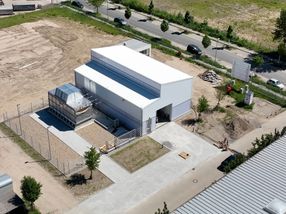
The findings formed the basis for developing a formulation for the production of packaging nets. The possibility of scaling up production via continuous melt mixing in a twin-screw extruder from the laboratory scale (approximately 1 kg/h) to the pilot plant scale (approximately 10 kg/h) was demonstrated. The developed formulation was subsequently successfully processed on an industrial scale into a blown film and the resulting strips for packaging nets.
It is precisely at the interface between material development, process scaling, and industrial application that the importance of high-performance transfer networks such as TransBIB becomes clear:
Projects like BioZ Waxes show that the successful transfer of bio-based innovations extends far beyond the actual material development itself. For industrial implementation, suitable application partners, scaling infrastructures, and expertise along the value chain are crucial. This is precisely where TransBIB comes in, by connecting existing innovation hubs and facilitating exchange between research and industry. For example, TransBIB offers various digital tools that, following successful scaling, help accelerate the transition to industrial application.
As a result, it was demonstrated that the rheological and mechanical properties of PBS can be significantly influenced by the incorporation of bio-based waxes. Even small proportions of 1.5% led to noticeable changes in the material’s flow behavior, as well as in its stiffness and strength.
Furthermore, the scalability of the manufacturing process was successfully demonstrated. The developed biomers were transferred from the laboratory scale to the industrial process and used for the production of market-relevant packaging products. The project thus makes an important contribution to the development of sustainable plastic solutions based on renewable raw materials and, at the same time, demonstrates how bio-based material innovations can find their way into industrial applications.
Note: This article has been translated using a computer system without human intervention. LUMITOS offers these automatic translations to present a wider range of current news. Since this article has been translated with automatic translation, it is possible that it contains errors in vocabulary, syntax or grammar. The original article in German can be found here.


Other news from the department research and development




These products might interest you