AI-driven microorganism mix has the potential for groundbreaking innovation
Federal Ministry for the Environment Launches First Joint SPRIND Challenge for a Biotech Breakthrough in the Circular Economy

Advertisement


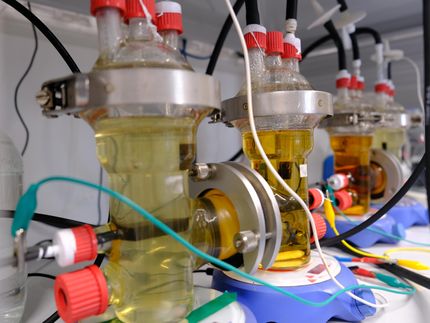
The Federal Ministry for the Environment and the Federal Agency for Breakthrough Innovations (SPRIND) are launching their first joint SPRIND Challenge. They are seeking teams that use artificial intelligence (AI) and microorganisms to develop new ways to biologically break down waste and residual materials and use them to produce chemicals and materials—or to create entirely new materials that remain within the circular economy. The goal of the competition is to help industrial biotechnology achieve a breakthrough in the circular economy by making the leap from the proven use of individual strains of microorganisms to communities of different microorganisms that share the individual production steps. Such communities are more robust, can cope with fluctuating raw material qualities, and can produce entirely new products or support the breakdown of complex waste streams such as scrap tires, textiles, or building materials. However, they are significantly more complicated to control, which has so far hindered their use. Artificial intelligence is intended to change this and make these communities predictable and controllable. The potential impact is significant: According to the International Energy Agency (IEA), nearly half of the increase in global oil consumption by 2050 will be attributable to the petrochemical industry—that is, the production of plastics, fertilizers, and other chemicals. The Federal Ministry for the Environment is providing 30 million euros in funding for the Challenge through 2029. Applications will be accepted until November 16, 2026, at 11 a.m. (CET).
Federal Environment Minister Carsten Schneider: “Germany and Europe are working flat out to become less dependent on imports for raw materials and to strengthen our sovereignty. The circular economy is a key element in this effort. It doesn’t start with recycling, but with the question of how and from what we manufacture products. The interplay between biotechnology and artificial intelligence presents a major opportunity: The technologies we develop today will determine the competitiveness and sovereignty of tomorrow. That is why we are collaborating with SPRIND for the first time to ensure that such innovations emerge in Germany and Europe and find their way to market here.”
Rafael Laguna de la Vera, Director of SPRIND: “Chemistry that does not rely on fossil raw materials but is based on waste streams instead? AI-driven microbial consortia can play a significant role in this. That’s why we’re seeking out the best talent in Germany and Europe to take on this major challenge. The competition format has proven its worth: In a multi-stage selection process based on fixed criteria, it quickly becomes clear which ideas have the greatest potential to move swiftly toward application and commercialization—and thus contribute to long-term value creation in Germany and Europe.”
In industrial biotechnology, microorganisms have long been used to produce substances, typically as individual, specifically optimized strains that rely on pure and consistent raw materials. The Challenge, on the other hand, focuses on communities of different microorganisms that share the individual production steps. Such microbial communities are more robust, can cope with fluctuating raw materials, and can produce entirely new products through biosynthesis or support the degradation of complex waste streams (such as scrap tires, textiles, and building materials). However, because many organisms and metabolic pathways interact with one another in this process, they have so far been difficult to predict and control. Artificial intelligence becomes a crucial prerequisite here: It analyzes measurement data, predicts the community’s behavior, detects undesirable developments early on, and thus enables stable and safe processes on an industrial scale. If this is successful, waste can be biologically recycled, new sources of raw materials can be tapped, new materials can be developed, and material cycles can be closed.
The challenge is part of the National Circular Economy Strategy (NKWS) and is funded as part of the Federal Ministry for the Environment (BMUKN)’s digitization initiative, which promotes digital solutions and artificial intelligence for the circular economy. The BMUKN is thus further developing its funding program “AI Lighthouses for the Environment, Climate, Nature, and Resources.” This is the next step toward more closely integrating artificial intelligence and environmental protection and harnessing the potential of AI for the environment and the economy. SPRIND Challenges focus on topics with significant potential for breakthrough innovation—that is, innovations that sustainably improve our lives by fundamentally transforming markets, creating new markets, or solving major technological, societal, or environmental challenges. The combination of AI and microbial communities offers this potential: it could fundamentally change how and from what chemicals and materials are produced.
The challenge will take place in three stages. An international panel of experts will select up to ten teams in Leipzig in early December 2026 and decide after each stage which teams will advance. Each team can receive up to 4.3 million euros in total. In total, the BMUKN is providing 30 million euros for the challenge through 2029. Ultimately, the top teams will be expected to demonstrate that their process works on a large scale and can make it to market.
Note: This article has been translated using a computer system without human intervention. LUMITOS offers these automatic translations to present a wider range of current news. Since this article has been translated with automatic translation, it is possible that it contains errors in vocabulary, syntax or grammar. The original article in German can be found here.


Other news from the department politics & laws









Most read news









More news from our other portals
























Something is happening in the chemical industry ...
This is what true pioneering spirit looks like: Plenty of innovative start-ups are bringing fresh ideas, lifeblood and entrepreneurial spirit to change tomorrow's world for the better. Immerse yourself in the world of these young companies and take the opportunity to get in touch with the founders.
See the theme worlds for related content
Topic world Synthesis
Chemical synthesis is at the heart of modern chemistry and enables the targeted production of molecules with specific properties. By combining starting materials in defined reaction conditions, chemists can create a wide range of compounds, from simple molecules to complex active ingredients.
Topic world Synthesis
Chemical synthesis is at the heart of modern chemistry and enables the targeted production of molecules with specific properties. By combining starting materials in defined reaction conditions, chemists can create a wide range of compounds, from simple molecules to complex active ingredients.