Lignin becomes valuable amides
Researchers achieve sustainable breakthrough
Advertisement


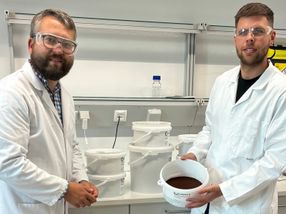
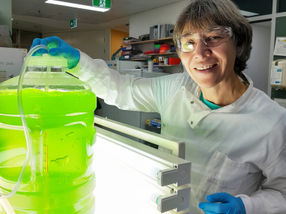
An international research team from the Leibniz Institute for catalysis (LIKAT) and several Chinese universities, led by Prof. Jagadeesh Rajenahally and Prof. Matthias Beller, has developed a novel, environmentally friendly process for producing high-quality amides from the plant substance lignin – important building blocks for pharmaceuticals, agrochemicals, and modern materials.
The utilization of renewable resources and the recycling/upcycling of waste materials are essential aspects of achieving sustainability and enabling a circular economy. In particular, the catalytic utilization of biomass-based raw materials is a crucial technology that forms the basis for the sustainable and renewable production of chemical products and biofuels. In this context, considerable efforts are being made to convert raw biomass into a variety of products using various catalytic processes.
From waste product to valuable resource Lignin is produced in large quantities during paper, pulp, and bioethanol production. It is the second most abundant biopolymer on earth after cellulose – and has been underutilized until now. In collaboration with scientists from Zunyi Medical University, Zunyi, Nanjing Forestry University, Guangzhou Institute of Energy Conversion, and the VSB-Technical University of Ostrava, the team at LIKAT is now demonstrating how this complex plant material can be efficiently utilized. "Instead of burning lignin, we can convert it into valuable chemical products," explains Dr. Zhuang Ma, one of the lead authors of the study. "Our process does not require toxic reagents and runs under mild conditions," adds Prof. Xinmin Li, co-supervisor of this work.
Single-atom catalysts make it possible At the heart of the innovation is a catalyst in which cobalt atoms are individually anchored in a carbon matrix. These so-called single-atom catalysts are extremely active and enable precise, selective conversion of lignin. The process consists of two steps that can be carried out directly in a reaction vessel: First, lignin is broken down into carboxylic acids with the aid of oxygen. These then react with ammonia or amines to form aromatic amides. This produces products that are currently still mostly obtained from fossil raw materials in a complex process.
Strong performance – even with real wood The team was able to obtain versatile aromatic amides even from ordinary pine wood chips – with a yield close to the theoretical maximum values. In addition, the catalyst can be reused up to six times without losing its activity. "Our research lays the foundation for truly renewable production of important chemical building blocks. This is an important step toward sustainable circular chemistry," says Prof. Jagadeesh Rajenahally.
Original publication


Other news from the department science











These products might interest you